

The Dolomites are a true paradise for photographers in autumn. Hundreds of photographers visit the region each year to capture golden larch trees and the Dolomites’ iconic jagged peaks reflected in crystal-clear alpine lakes.
However, not every lake lives up to expectations this time of year. Some lose much of their water over the summer, while others dry up completely by autumn.
Below are three lakes, plus one bonus spot, where the water is often very low by October, right in the middle of the golden larch season. In the worst case, you will find a dry lakebed. Some of them take a demanding hike to reach, so it is worth knowing what to expect before you set out.
Why some Dolomites lakes dry up by autumn
These lakes fill in spring and early summer with snowmelt and rain, and in some basins rising groundwater adds to them. By late summer the inflow dwindles, especially after a hot summer like that of 2026. Water keeps evaporating or seeping into the ground, and some lakes shrink dramatically or disappear until the next season.
Geology plays a part as well. Dolomite rock is often fractured, so water drains through cracks and flows underground.
1. Lago di Sorapis
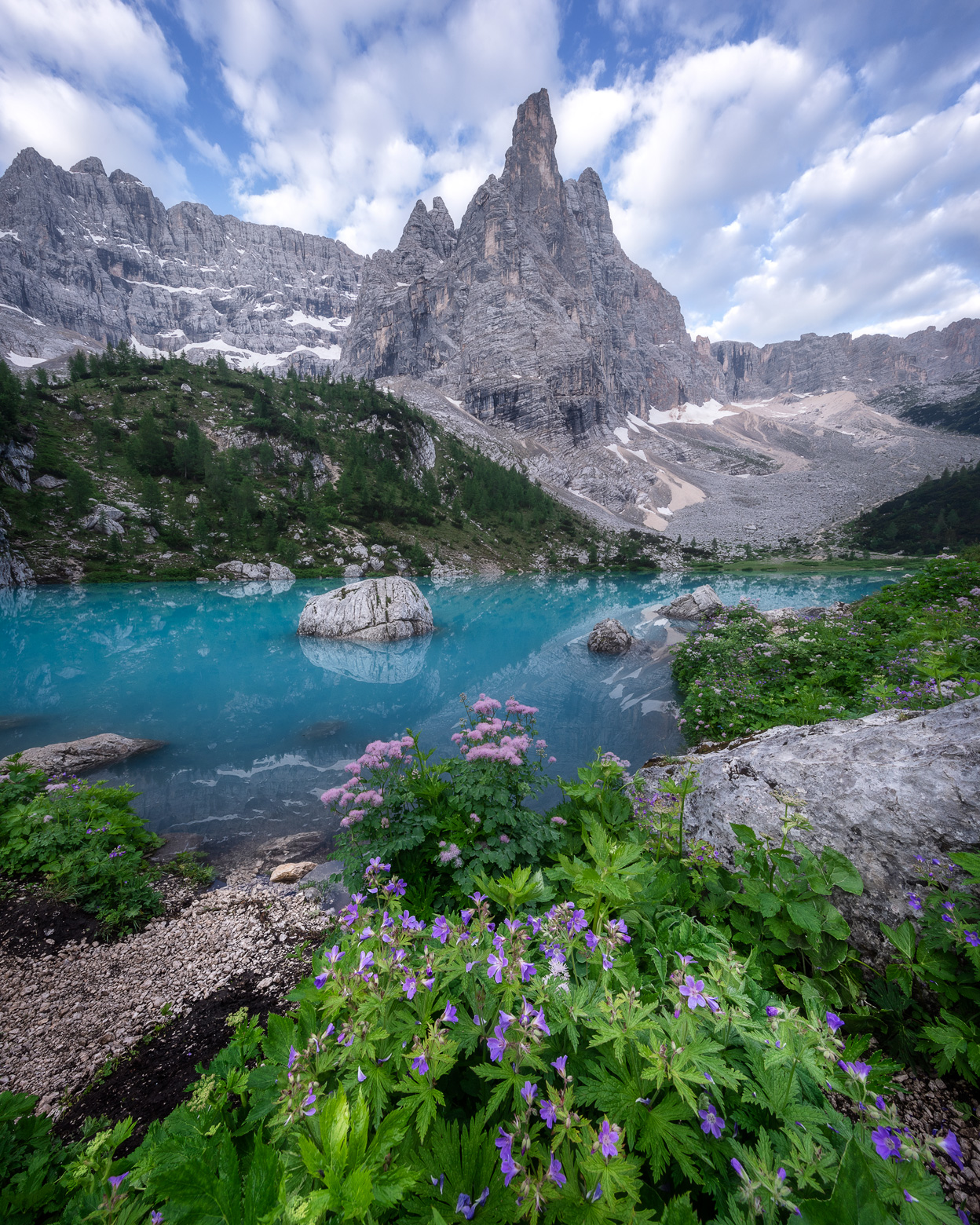

- Lake: 46.52096, 12.22494
- Parking: roadside at Passo Tre Croci, 46.55614, 12.20472
- Hike: 2 h 15 min one way (shortest route)
- Elevation gain: 1,050 ft (320 m)
Lago di Sorapis (also spelled Sorapiss) is probably the most famous lake in the Dolomites. Its striking turquoise water makes it truly unique. This color comes from fine rock particles, known as glacial flour, carried into the lake by meltwater from the Sorapis glacier.
The lake is fed by snowmelt and glacial runoff, but part of its water seeps through cracks in the lakebed and flows underground, resurfacing further down the slope. When the inflow drops, the level can fall quickly. Of the three lakes in this article, Sorapis has the best chance of keeping its water, thanks to the glacier.
Photography tip: The turquoise color is most vivid on sunny days. To capture the lake at its best, plan your hike around the weather forecast.
2. Lago di Limides


- Lake: 46.51209, 12.02248
- Parking: 46.52014, 12.01887
- Hike: 40 min one way
- Elevation gain: 450 ft (136 m)
Lago di Limides is a small alpine lake near Passo Falzarego, with Tofana di Rozes reflected in its surface. It is very shallow, about 3 ft (1 m) at its deepest, and its level depends on rain and snowmelt. It often dries up as early as mid-summer.
Photography tip: Come in early summer, while the lake still holds water. Look for a foreground element such as dead tree trunks to add depth, and use focus stacking to keep the whole scene sharp, from the foreground to the distant peaks.
3. Lago delle Baste
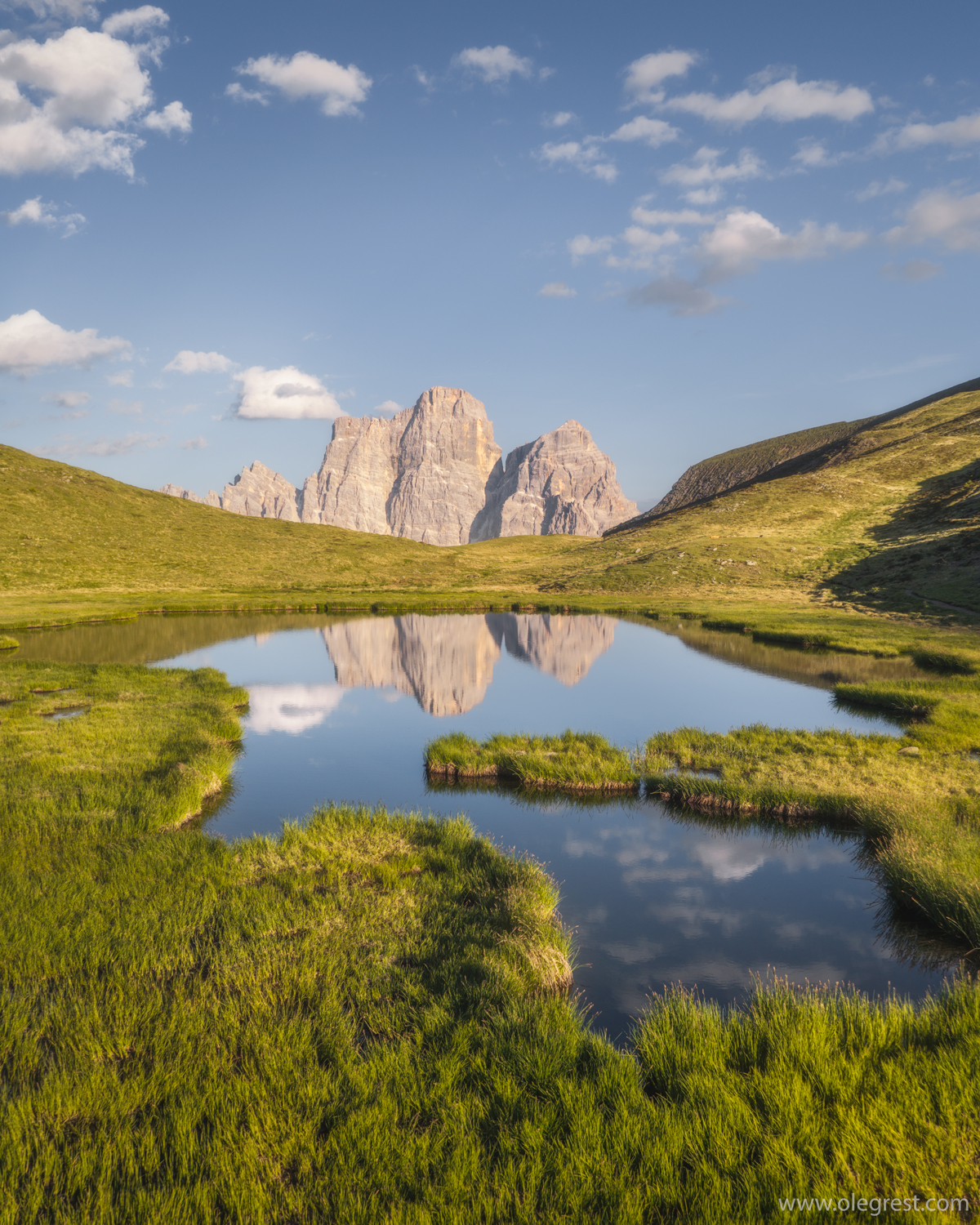
- Lake: 46.46798, 12.08155
- Parking: Passo Giau, 46.48186, 12.05758
- Hike: 1 h 20 min one way
- Elevation gain: 580 ft (177 m)
Lago delle Baste is a small alpine lake on the Mondeval plateau, and on a calm day Monte Pelmo is reflected in it. The lake is fed by rain and snowmelt. Once the snow has gone, a hot summer can drop the level sharply, and the lake may dry up completely. The ground around it can be very marshy, so watch your step.
Photography tip: The marshy shore makes it hard to find a dry spot with a clean reflection. If reflections are the plan, bring waterproof boot covers that reach as high up your legs as possible.
Bonus: Ra Gusela pond

- Pond: 46.48179, 12.06194
- Parking: Passo Giau, 46.48186, 12.05758
- Walk: 10 min one way
- Elevation gain: about 160 ft (50 m)
The picturesque Ra Gusela pond sits in an alpine meadow near Passo Giau. The luckiest photographers have managed to capture not only reflections of Ra Gusela and Tofana di Rozes, but also the local cows that often graze nearby.
The pond is fed by snowmelt and rain and is extremely shallow, so it can dry up very quickly. The muddy banks are slippery and hard to walk on.
Before you go
Check the current water level before you set out. Look for recent photos, posts and stories in photography and hiking groups on social media. It can save you a long hike to a dry lakebed.
Pick a calm, windless day. When the water is still, it works as a mirror and gives you reflections to compose with.
For the best light, be at the lake before sunrise or stay until sunset. For sunrise at Sorapis that means hiking in the dark, so bring a headlamp.
Good luck, and happy shooting!
Photograph the Dolomites with us
In 2027 we run two photo tours in the Dolomites: in summer (July 1–7) and in autumn (October 13–19). Small groups of 6–8 photographers, two guides, and a daily plan built around the light and current conditions.
See the autumn Dolomites photo tour
More location guides from our tours are on the blog. New guides and tour dates by email: Join the newsletter.