

Every autumn, photographers from all over the world head to Japan to capture the changing colors of the foliage, especially the maple trees. The Japanese even have a special word for enjoying this seasonal spectacle: momijigari, literally “hunting for red leaves.” For the Japanese, this is an important tradition, and they also make a point of visiting the best spots.
Naturally, there is a huge rush everywhere at this time. In Kyoto, for example, some temples get so crowded that it is almost impossible to move around, and some places cannot be visited without booking a time slot in advance.
We want to suggest a few less obvious and less touristy places for photographing autumn foliage in Japan.
1. Ryuokyo Gorge (Dragon King Gorge), Nikko
- Location: between Kinugawa Onsen and Kawaji Onsen, Nikko, Tochigi Prefecture
- Parking: free lot by Ryuokyo Station, 36.86063, 139.71912
- Momiji season: late October to early November (check the autumn leaves forecast)
- Admission: free
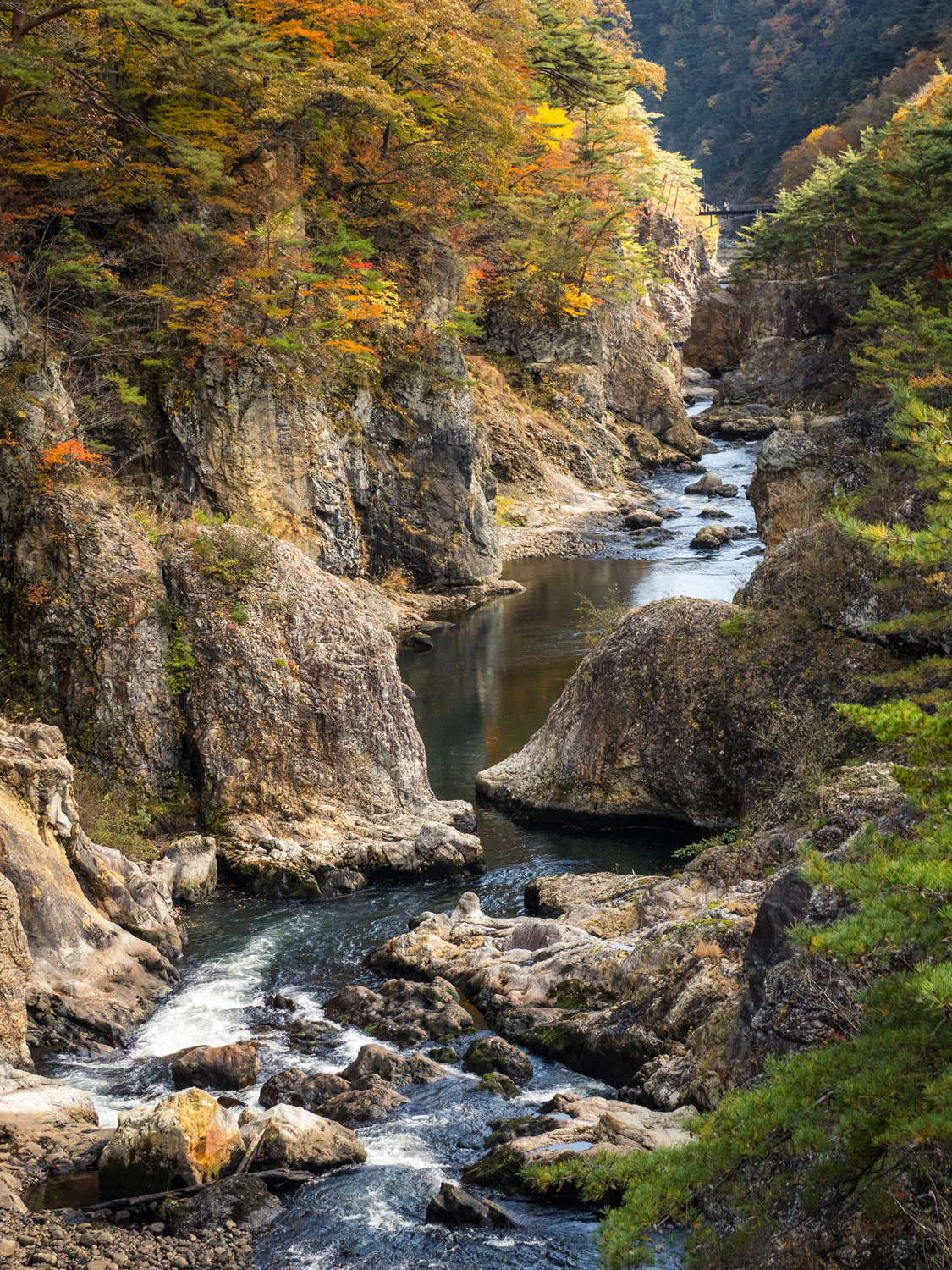
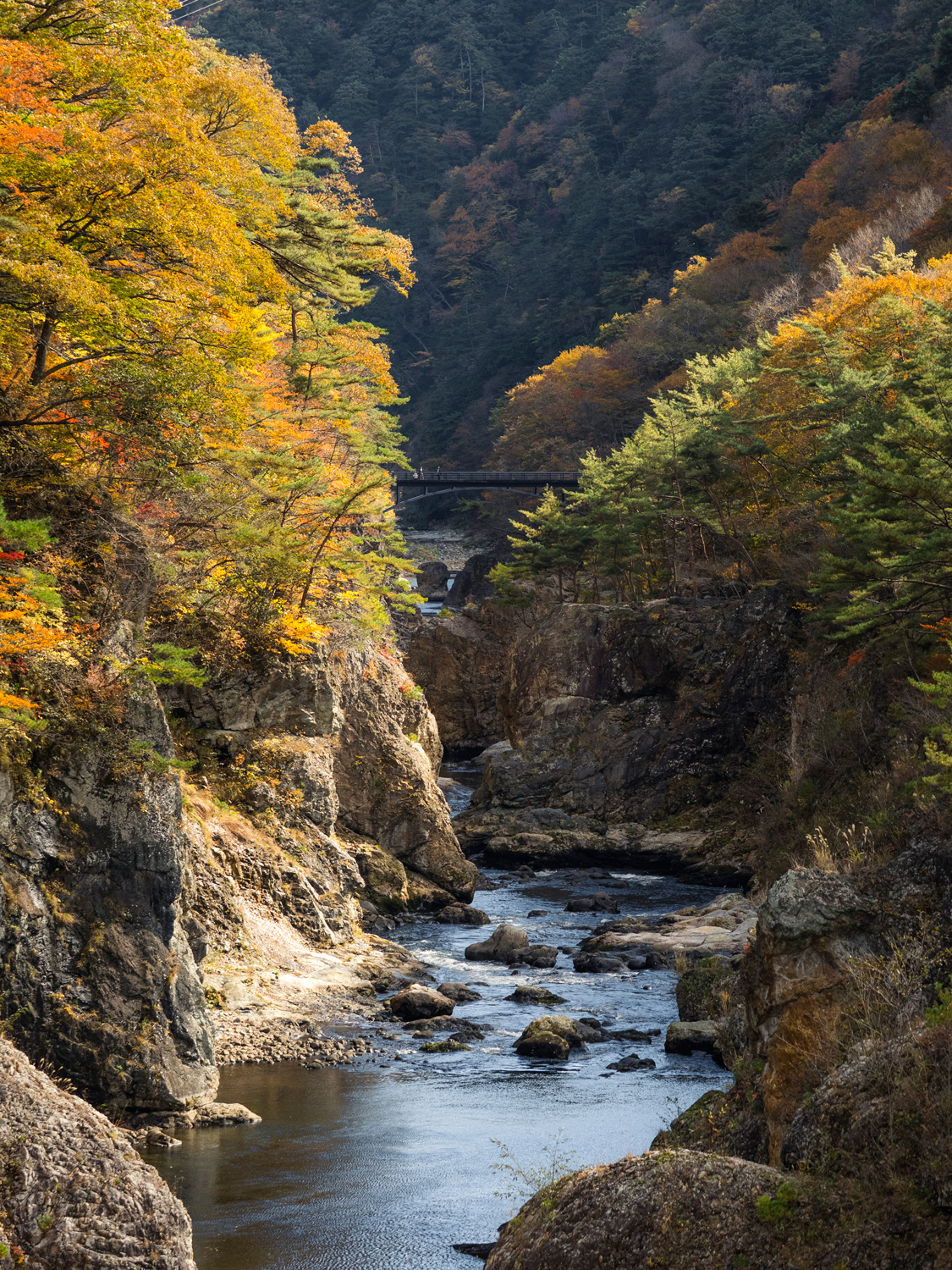
This incredibly picturesque gorge was carved by the Kinugawa River into volcanic rock. Its shape resembles a curved dragon’s tail. Both sides of the gorge are covered with dense mixed forest of maples, oaks, beeches, birches and mountain cherry trees, which impresses with its variety of colors in autumn.
There are several waterfalls along the route, which are quite tricky to photograph. The best way to photograph Nijimi Falls is from Nijimi Bridge.
Several picturesque bridges span the gorge. We recommend walking at least the 1.9-mile (3 km) loop route, crossing the Musasabi suspension bridge. Just beyond the bridge, there is a small hut where an elderly man sells delicious mandarins and coffee made with water from the river.
Photographer’s tip: Bring filters and a wide-angle lens. Along the way, you will come across a picturesque stream that looks beautiful when photographed with fallen leaves.
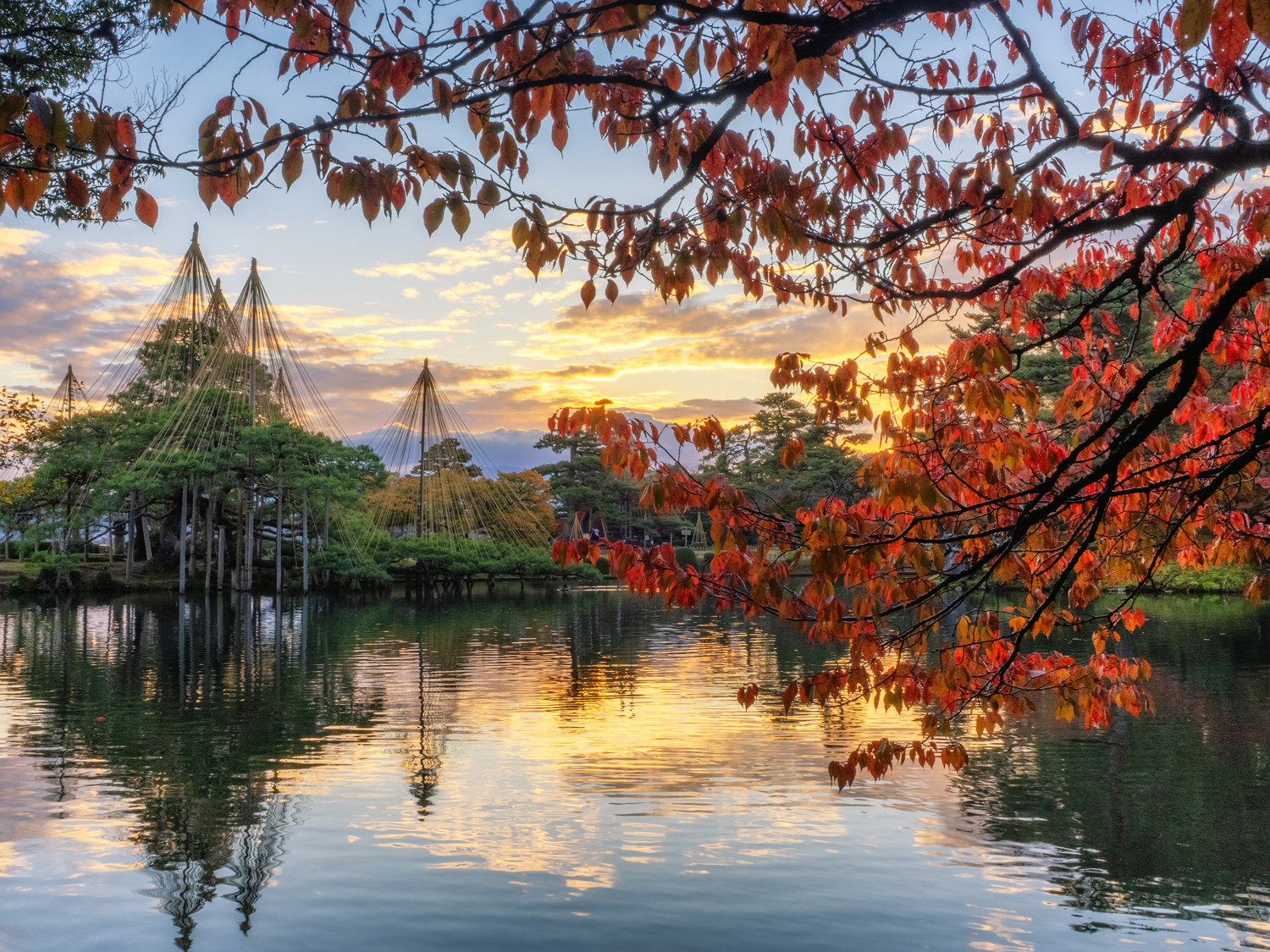
2. Kenroku-en Garden, Kanazawa
- Parking: 36.55990, 136.66363
- Momiji season: mid to late November (check the autumn leaves forecast)
- Admission: 330 yen (free during early-morning hours, see the tip below)
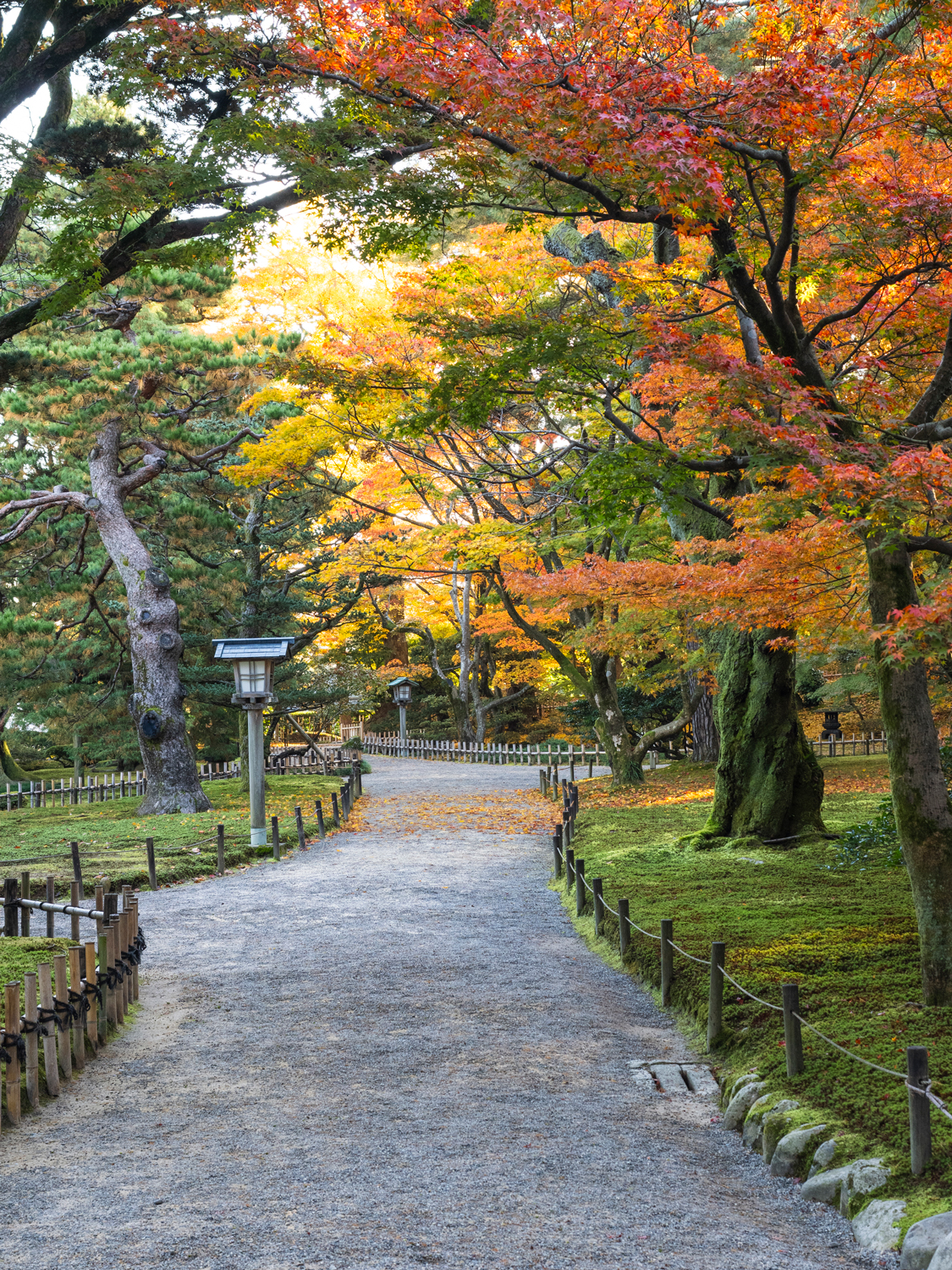
Kenroku-en is no secret, but at dawn you can have it almost to yourself. This garden is one of the “Three Great Gardens of Japan” and the gold standard of Japanese landscape design. Its name can be translated as “Garden of Six Attributes,” as it combines contrasting qualities: spaciousness and seclusion, a sense of antiquity and human artistry, the sound of flowing water and panoramic views.
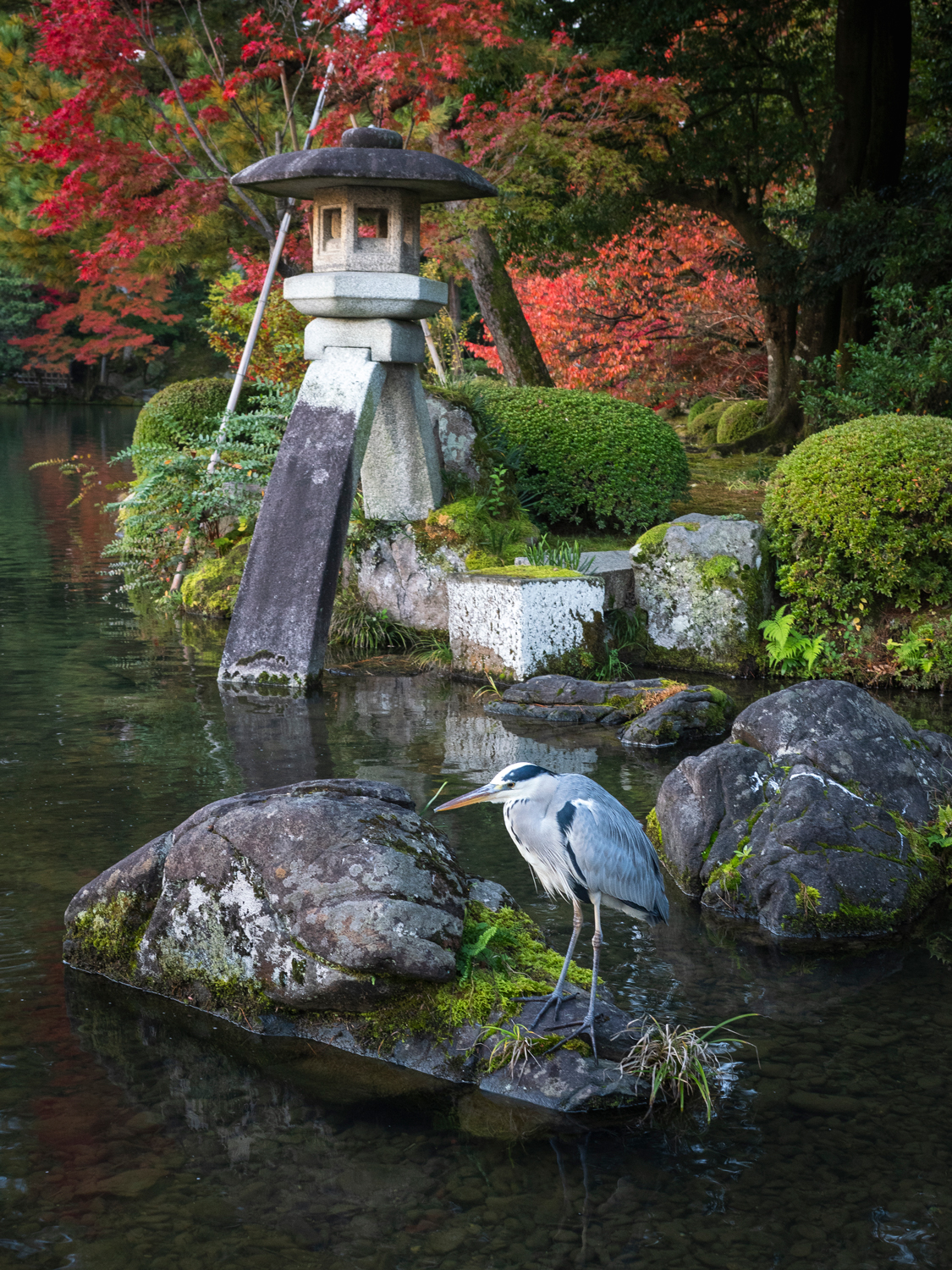
Photographers are particularly drawn to the yukitsuri, the cone-shaped rope structures that support tree branches under heavy snow. They are put up from November 1 to mid-December, so in November you can photograph them together with the autumn colors. In autumn, the red colors come from maples and enkianthus, while the yellow hues come from ginkgo and zelkova trees. A local heron lives here and happily poses for photographers against the backdrop of the Kotoji stone lantern, a symbol of both the garden and the city. This place is a paradise for photographers who love reflections.
Photographer’s tip: During the autumn season, the garden opens at 8:00 AM. Come between 6:00 and 7:45 AM: admission is free at this time and there are few people around, but you must leave 15 minutes before the garden opens. Only two gates are open for early entry: Renchi-mon (also called Hasuike-mon) and Zuishinzaka.
3. Higashiyama Walking Course, Takayama
- Parking: 36.14314, 137.26102
- Length: about 2.2 miles (3.5 km), roughly 2 hours
- Momiji season: November (check the autumn leaves forecast)
- Admission: free
Be sure to walk this short but very picturesque route in the eastern part of the city, which passes through various temples, shrines and quiet streets.
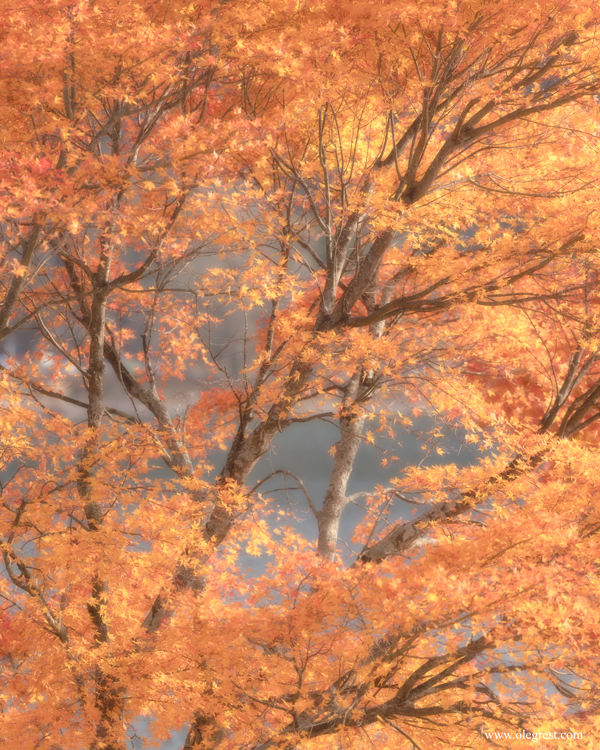
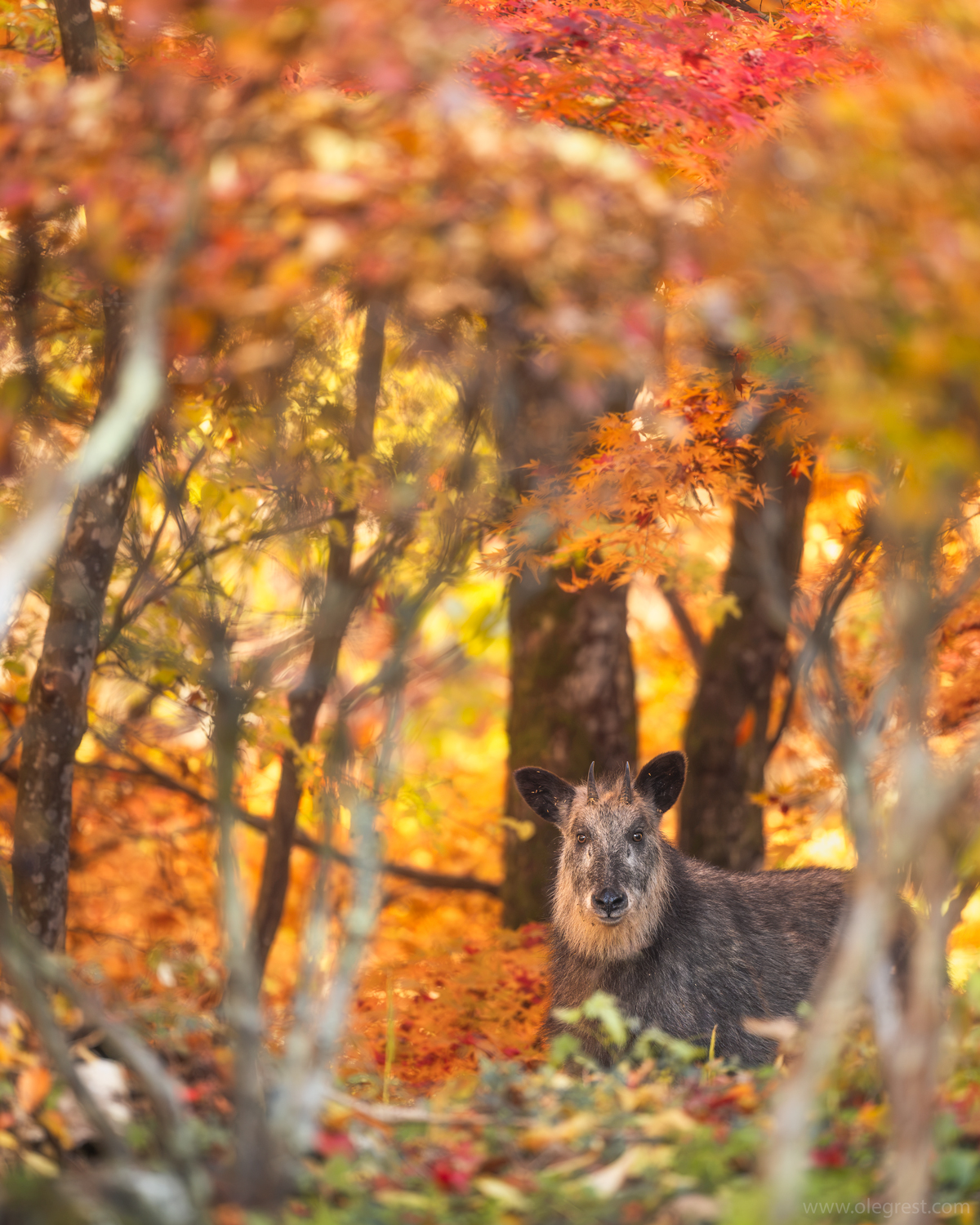
The first half of the route goes through a park inhabited by Japanese serows (kamoshika, a wild goat-antelope). The second half takes you past temples. This is exactly where we saw numerous blazing red maples of incredible beauty and golden ginkgo trees.
We also recommend taking a stroll through the streets of the old town after your walk. They are absolutely charming, and there are far fewer people here than in Kyoto. You can also try some delicious chestnut sweets.
Photographer’s tip: Bring a telephoto lens. If you encounter a serow, you won’t regret it. They happily pose for photos and seem quite accustomed to people. And don’t mistake a serow for a bear, as many people do!
Before you go: check the autumn leaves forecast
Momiji dates vary from region to region and depend on the climate and elevation. In addition, the forecast changes every year. When planning your trip, check the preliminary autumn leaves forecast (kōyō or momiji forecast), which is usually published in early September. If you are planning your photography trip well in advance, at least check the forecasts from the previous year.
Photograph Japan with us
Our Japan photo tour runs in winter, February 12–20, 2027: a small group of 6–8 photographers, two guides, and a daily plan built around the light and current conditions.
See the winter Japan photo tour
We are also preparing an autumn tour of Japan. To hear about it first, join the newsletter. More location guides from our tours are on the blog.