

Lake Bled is the most photographed place in Slovenia, and that sets a trap: it feels like every frame here has already been taken. The island, the church, the castle on the cliff, the reflection – everyone knows the postcard. Yet we come back to this lake every autumn with a group, and every time we bring home new images. Because Bled is not one spot but a few dozen, and they work differently at sunrise, in the blue hour and in fog.
This guide is practical: where to start, where to walk, what to carry and which techniques to use. All of it comes from the field, along the route we take our tour participants.
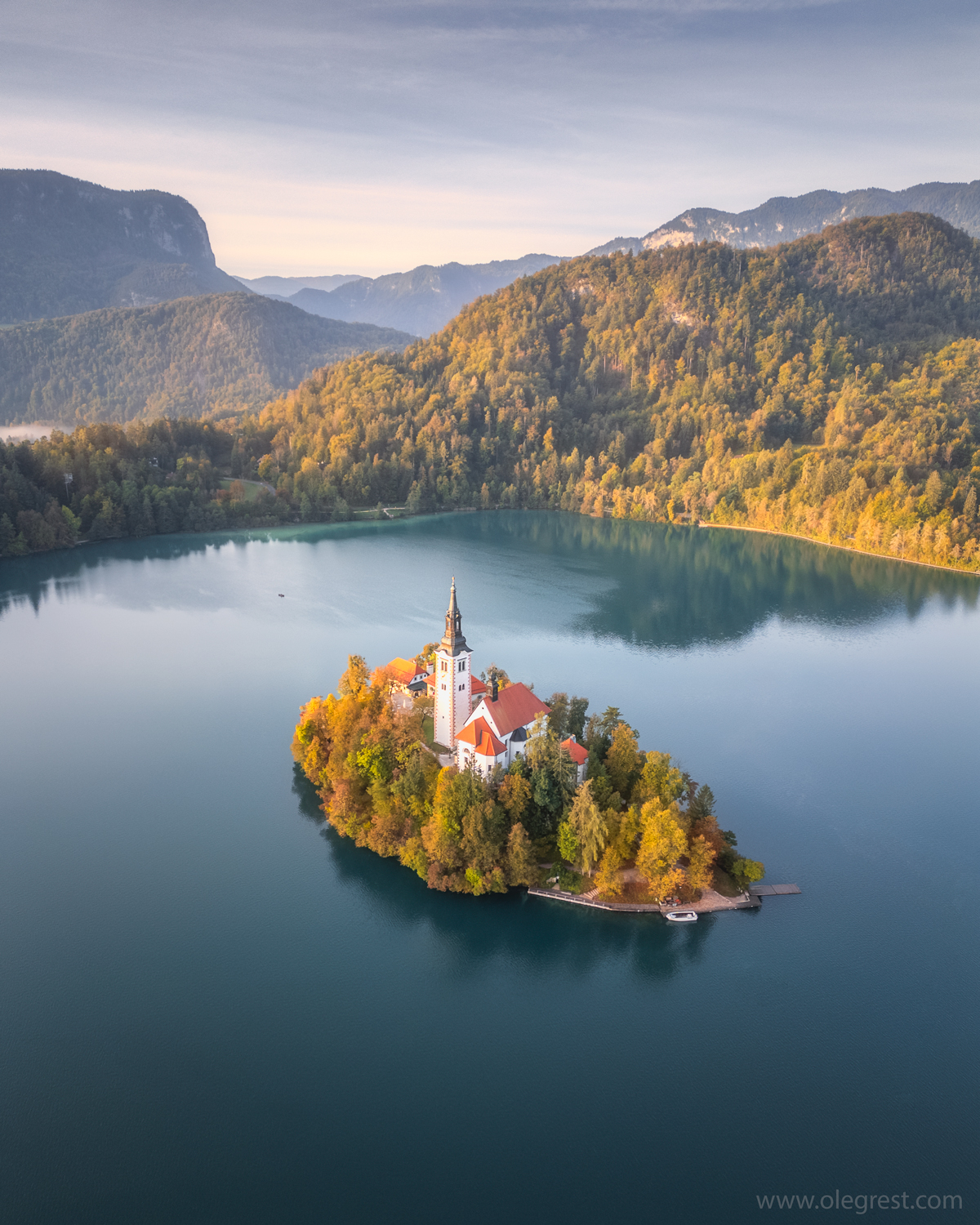
A little history, so you know what you’re shooting
Bled Island is Slovenia’s only natural island. On it stands the pilgrimage Church of the Assumption of Mary. The first stone church here was consecrated in 1142; the present Baroque form dates from the late 17th century. Ninety-nine stone steps lead up to it – a stairway from 1655 – and by local tradition a groom must carry his bride up all of them. Inside hangs the “wishing bell”, cast in Padua in 1534: legend has it the first bell, commissioned by a widow from the castle in memory of her husband, sank with the boat carrying it, and the Pope sent a replacement. Ring it and your wish comes true; nearly everyone rings it, so you’ll hear the bell from the shore all day.
On the cliff above the northern shore sits Bled Castle, first mentioned in 1011 in a deed of Emperor Henry II – one of the oldest castles in the country. Pletna boats carry visitors to the island: wooden craft with striped canopies, steered by oarsmen standing up. They’re part of the local tradition too – and for a photographer, a ready-made foreground.
None of this is trivia. The bell tower, the castle, the boats and the stairway are the details your frames are built from once the wide shot is done.
Before you head out: timing, parking, gear
October light. We run our Slovenia tour in mid-October. Sunrise is around 7:00–7:30 a.m., sunset around 6:00–6:30 p.m. We head out well ahead – not fifteen minutes before sunrise but an hour to an hour and a half, and the same before sunset – to walk the shore calmly, find compositions and set up, rather than sprinting to the first available spot while the sky is already burning.
Where to start. Every main route – the lakeside walk and both viewpoint climbs – begins on the western shore. There are two paid lots a couple of minutes apart, and the choice between them matters for a photographer. Mala Zaka (P13), by the rowing centre, is about €4.50 an hour, but payment applies only from 8 a.m. to 8 p.m.: arrive in the dark for sunrise and you park free until eight. Velika Zaka, by the campsite, is about €7.50 an hour around the clock, with barriers. We start from Mala Zaka: the first frames are a hundred meters away, and the Ojstrica trail begins right there. Prices are as of 2026 – Bled changes them every season, so check on site.
What gear to bring
At Bled you need the full kit, and that’s not an exaggeration:
– a telephoto, 70–200mm – for details and compression
– a standard zoom, 24–70 or 24–105mm – the main lens for the shore
– a wide-angle, 10–20 or 15–35mm – for foregrounds
– a tripod – essential; without it there’s no blue hour and no long exposures
– filters: ND 3, 6 and 10 stops, and a polarizer – a headlamp – you leave in the dark and climb to the viewpoint in the dark
For a single spot this list is overkill, but in one morning you’ll work five or six scenes with different lenses, and there’s no time to go back to the car.
Drones. Flying over Bled is possible, but the rules change regularly, and what was allowed last season may be restricted this one. We brief our tour participants on the current situation before each trip; we always follow local regulations – and we advise you to do the same.
Location 1: the lakeside path
A walking path circles the lake – roughly 6 km (3.7 miles) all the way round. For a photographer it isn’t a stroll, it’s a production line: shooting spots come every few meters, and none of them repeat.
The first hundred meters
We take our first frames barely a hundred meters from the parking lot. From here it’s the classic: island, church, castle on the cliff to the right, all in one frame with a reflection. The standard zoom does the work. If there’s ripple on the water, an ND filter and a long exposure smooth the surface; a polarizer cuts the glare and brings out the color. This is also a good spot for a panorama: a few overlapping vertical frames, stitched – you get the wide view without wide-angle distortion.
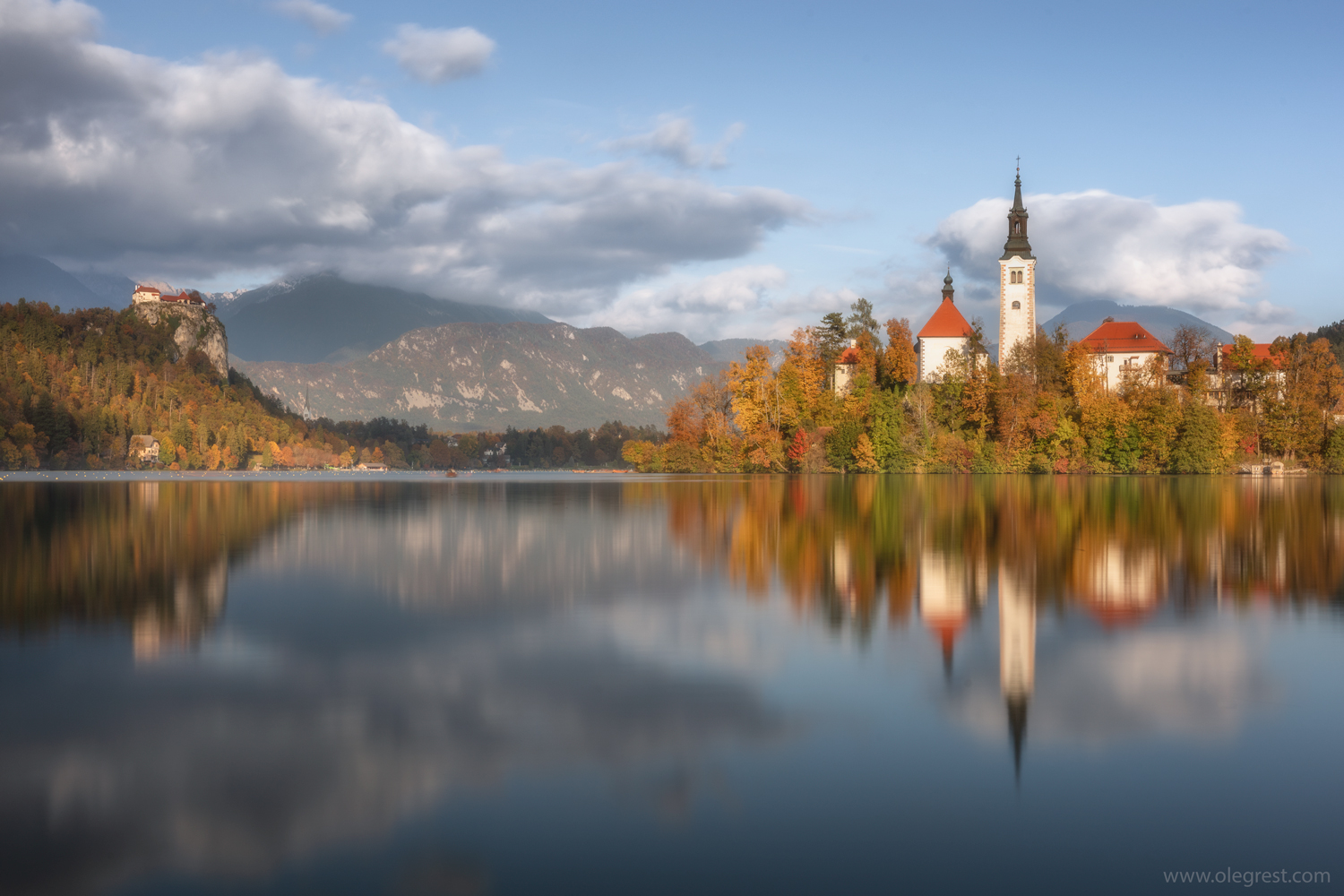
The wooden stairway
A little further along there’s a wooden stairway down to the water, with a railing. From here you get a view of the church that barely exists online: the planks and rails run into the frame as leading lines, autumn branches frame the island from above. This is where we switch to the wide-angle and focus-stack: the railing half a meter from the lens and the bell tower on the far shore both need to be sharp.
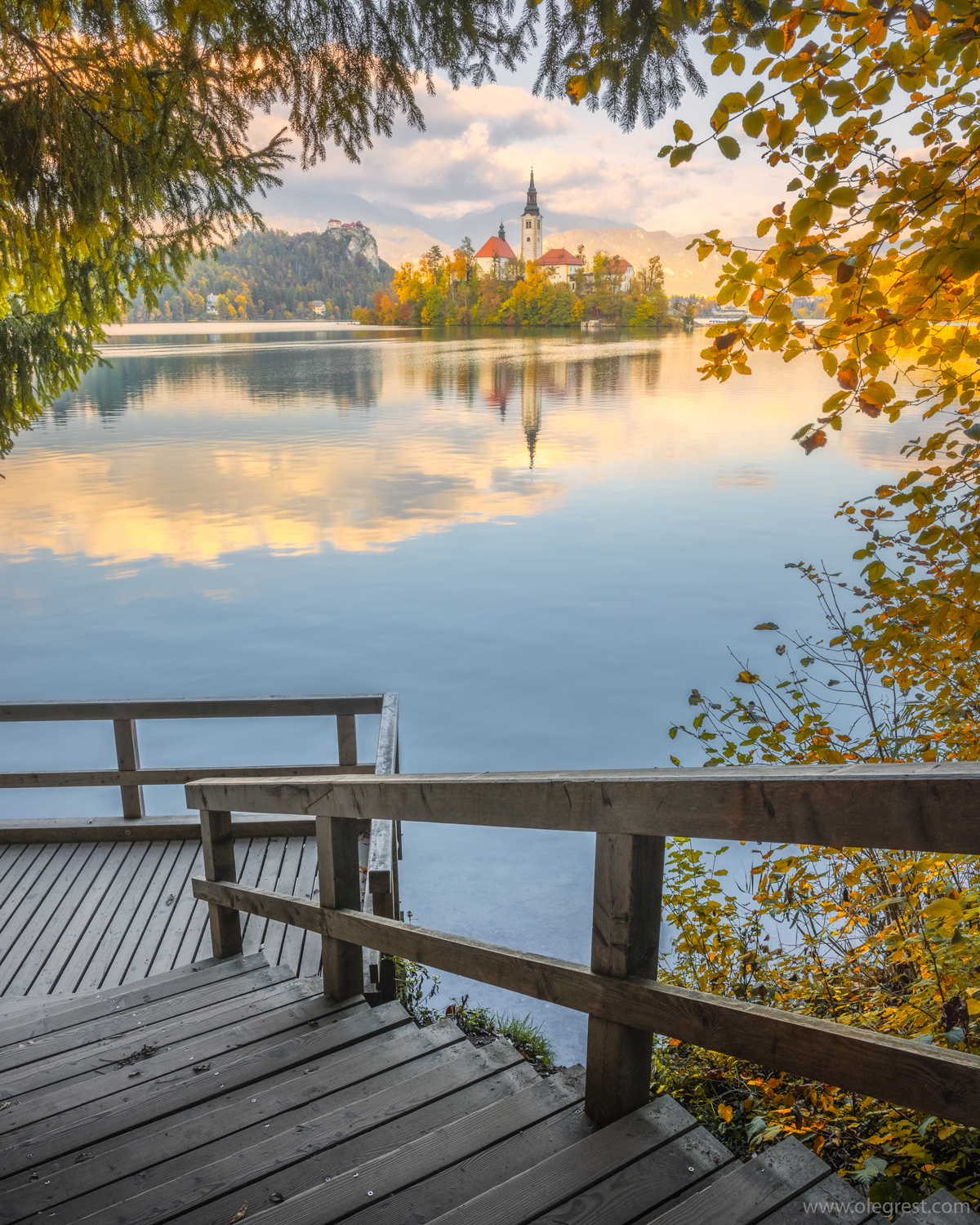
Leaves as a frame
In autumn the shore is yellow, orange and red, and the leaves are a ready-made framing tool. My approach: shoot through the foliage at the widest aperture so the leaves melt into soft blur and the bell tower stays the only sharp element. The frame below was shot at f/2.8 on a Canon RF 24–70.
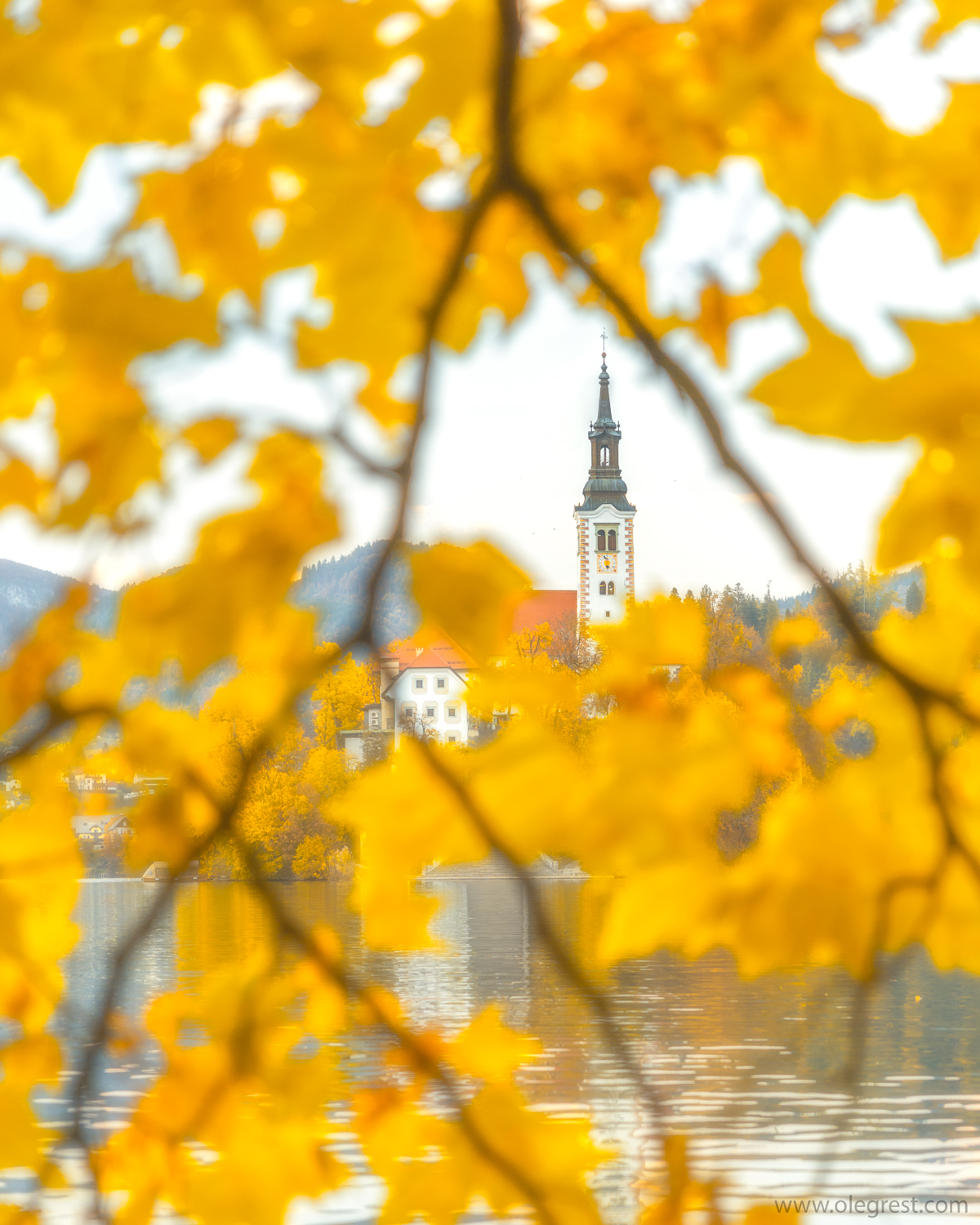
Trees on the shore
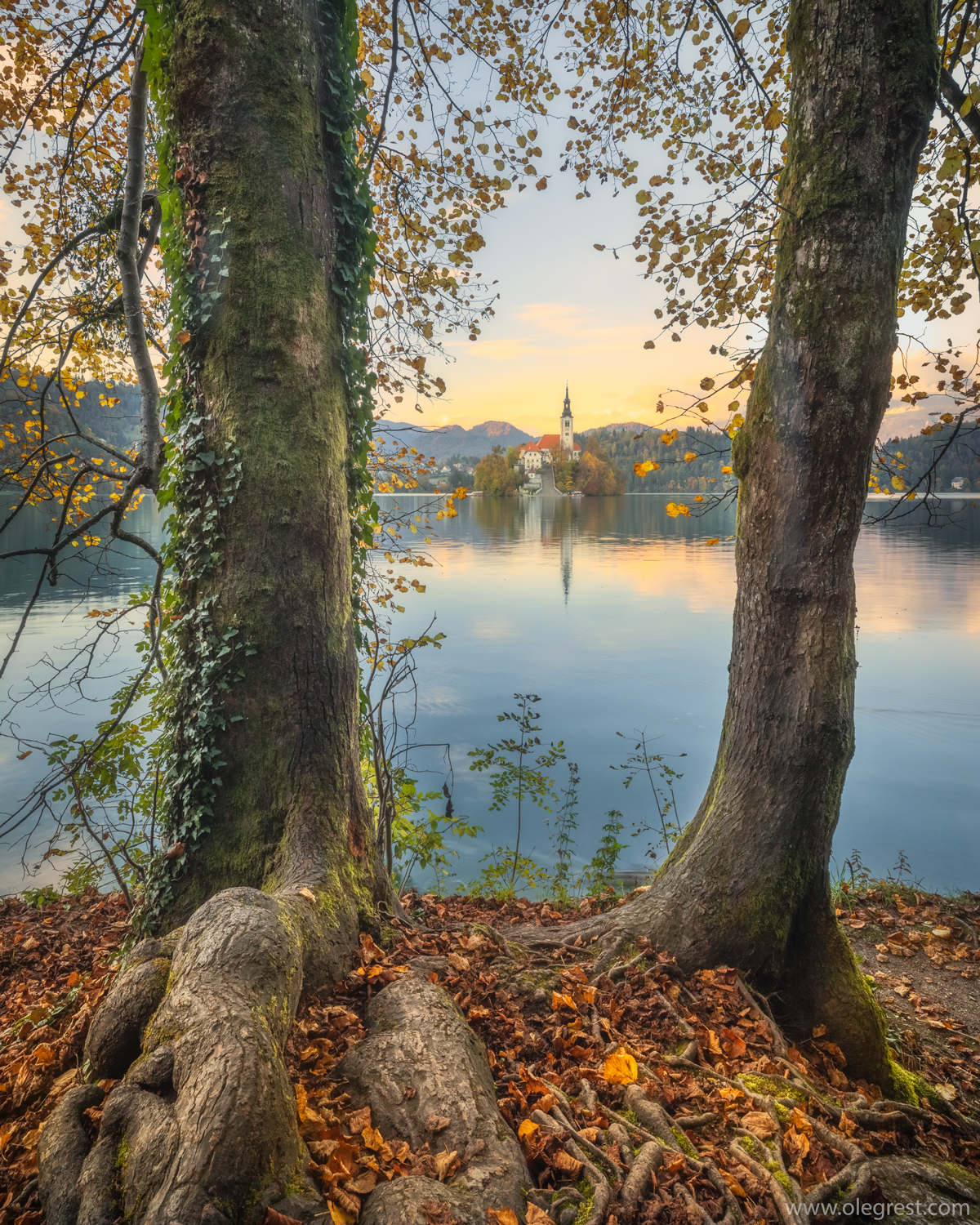
Further along, trees stand right at the water’s edge, and that’s a scene of its own. Two trunks with mossy roots form a natural arch, the island in the gap. The composition solves two problems at once: it’s unconventional – you won’t find this angle in guidebooks – and it works on a contrast of scale: huge trunks up front, a tiny church far away.
Roots at the water
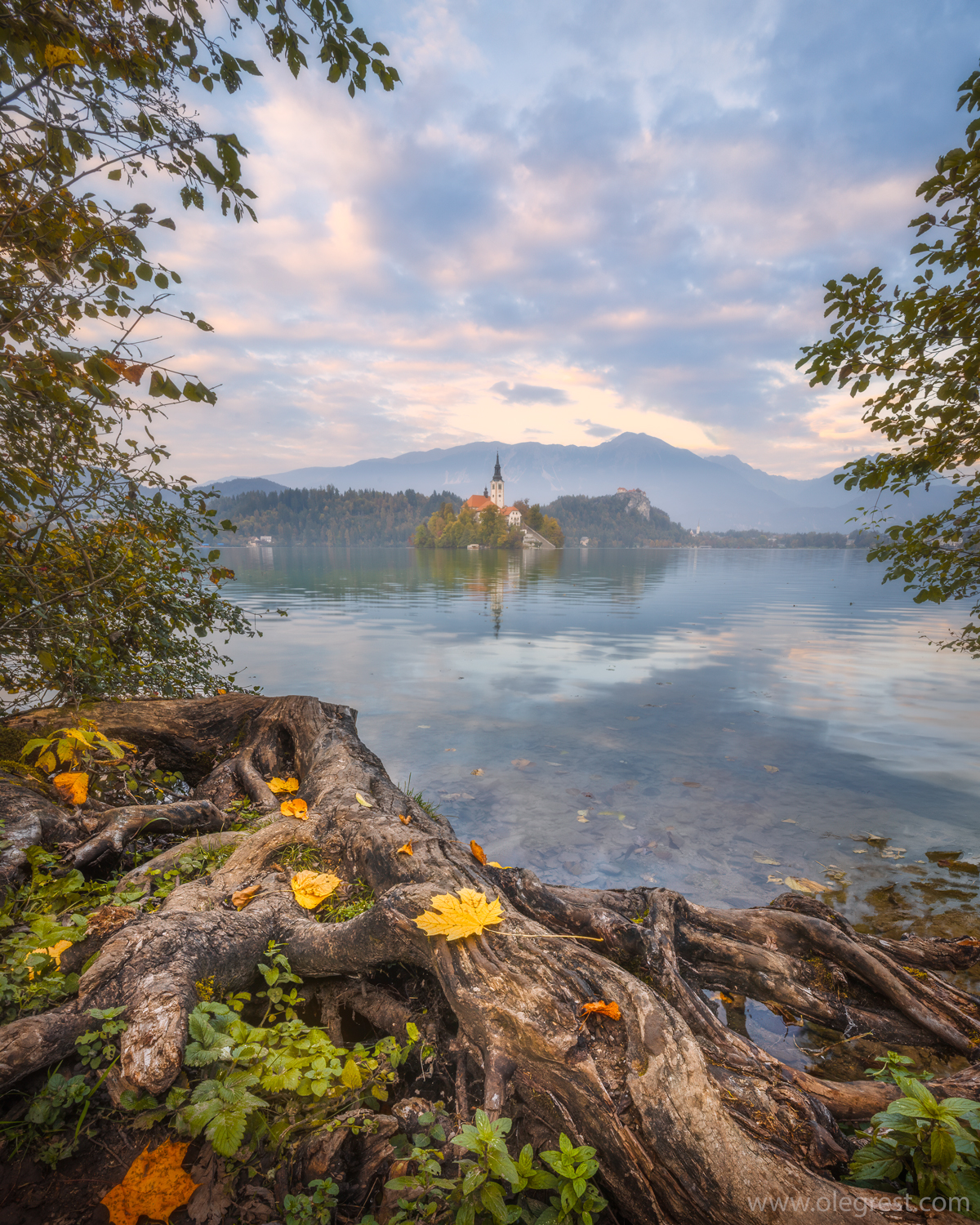
Keep walking and you’ll find not only standing trees but half-submerged ones: roots reaching into the water with fallen maple leaves caught between them. We don’t walk past a foreground like that. Wide-angle, camera low – almost at root level – and focus-stacking again: roots thirty centimeters from the lens and the island a kilometer away, both sharp.
Boathouses
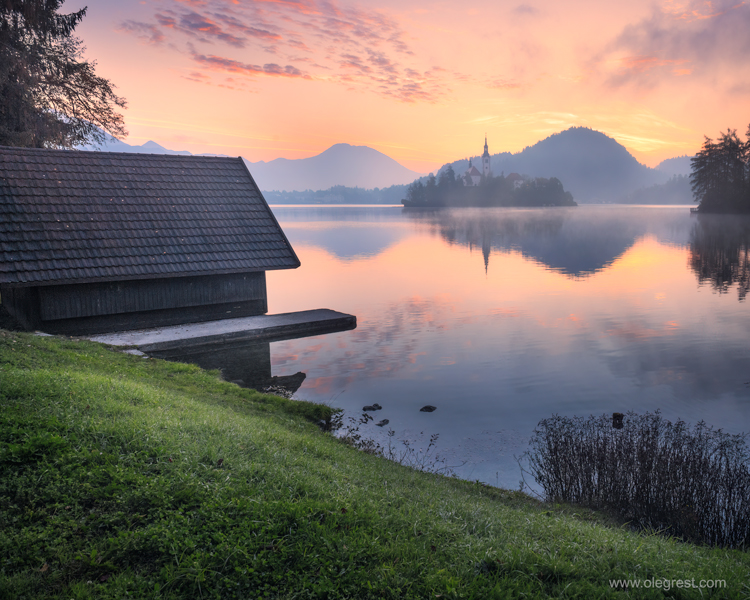
Wooden boathouses line the shore – they shelter the rowing boats. A dark boathouse roof on the left, a green slope in the foreground, the island in pink haze: the structure gives the frame an anchor and depth that a plain view across the water lacks.
Pletna boats
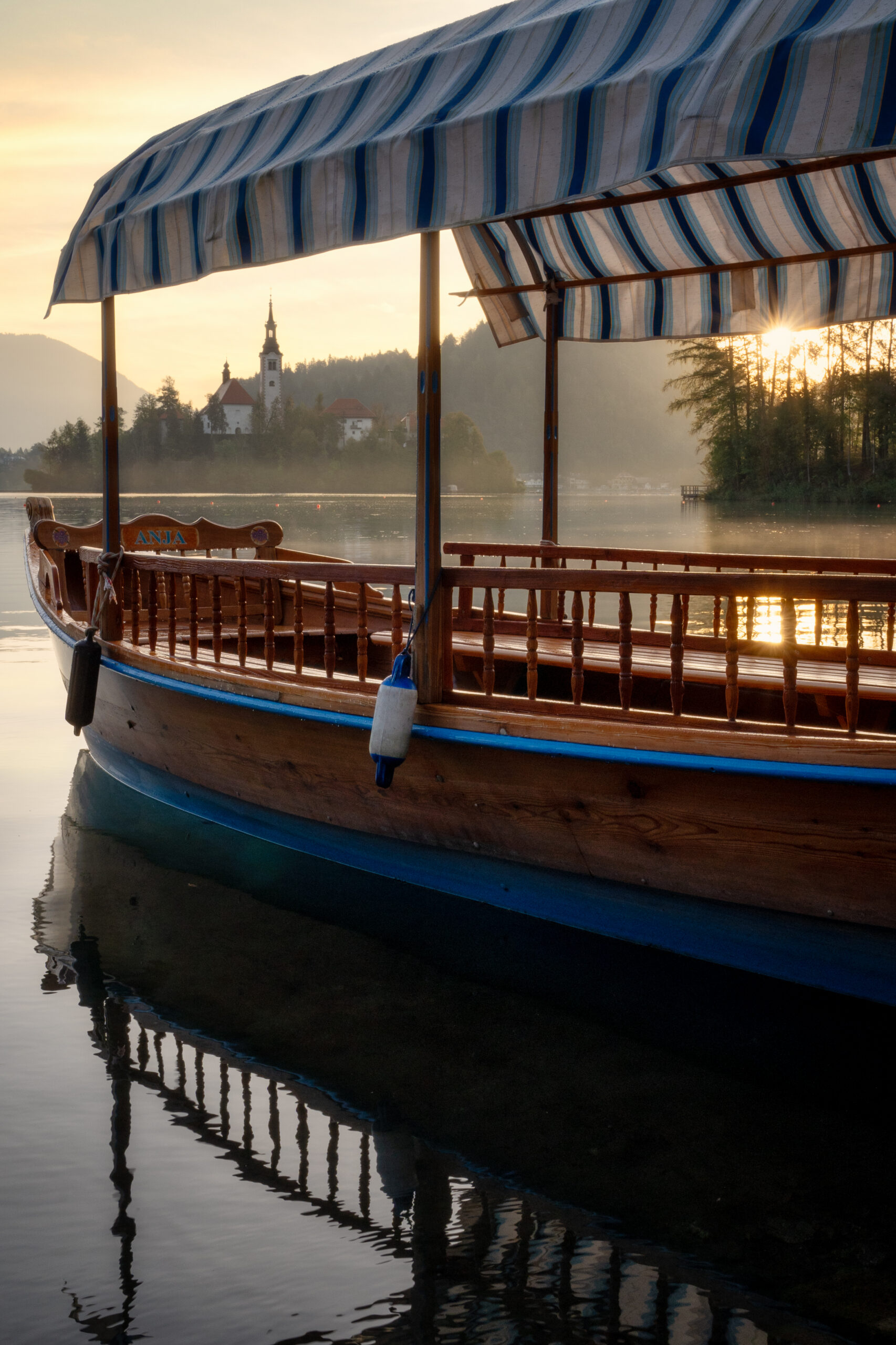
If you’re lucky and the pletnas are moored at the pier, a boat becomes the main subject: striped canopy, carved rails, and beyond them the bell tower and the first sun in the branches. A frame like this says more about Bled than one more view across the water.
Sunrise, sunset and the blue hour
Bled has three windows of light, and none of them should be skipped. Sunrise is the main one: in October the sun rises behind the island, and from the shore the first rays run along the water. Sunset is softer: the sun sets behind the hills to the west – behind you if you’re shooting from the western shore – so evenings are about reflections of a warm sky and side-lit island rather than backlit frames.
The sunset is over – that’s no reason to fold the tripod. Same in the morning: you arrive before sunrise, not for it. The blue hour – twenty to thirty minutes before sunrise and after sunset – is special at Bled: the church on the island is lit, lamps glow along the shore, and on a long exposure all of it lays down into the water as steady columns of light. The sky at this point isn’t black but deep blue – and that’s what gives the best reflections.
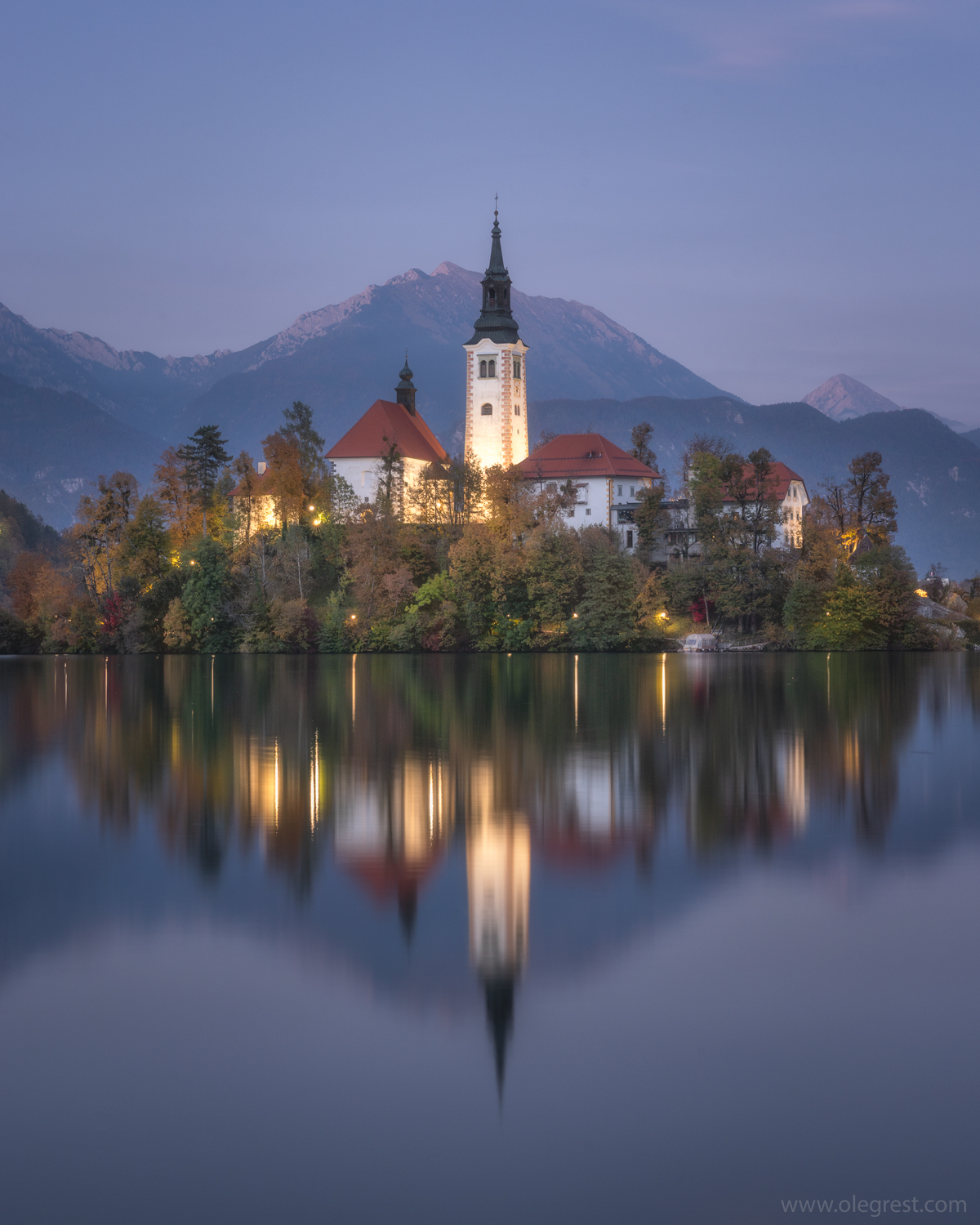
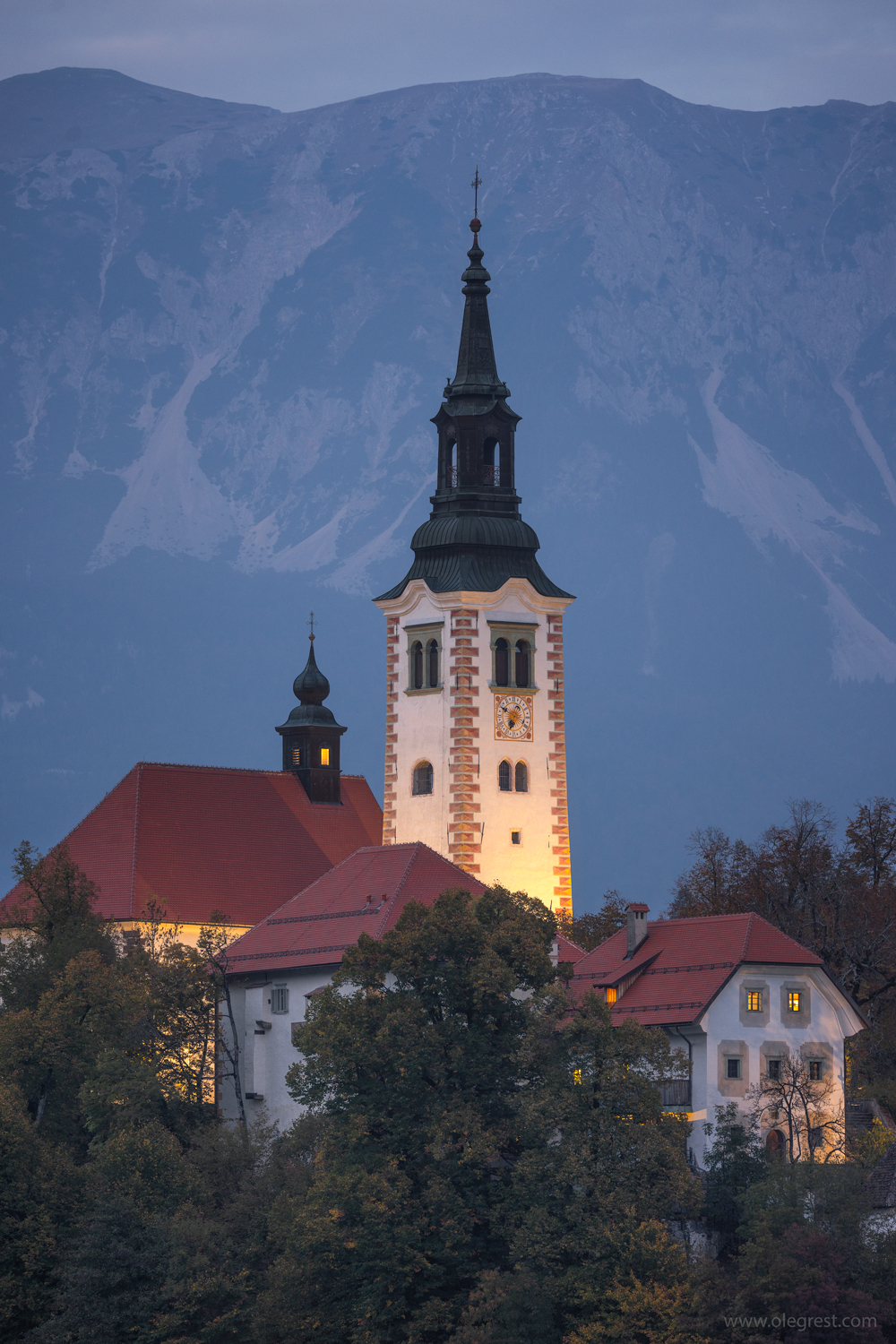
The blue hour is also telephoto time. With the wide shot done, a 70–200 pulls out the details: the lit bell tower against the dark wall of the mountains, the castle on its cliff with warm windows. Without the lighting these subjects don’t work – by day the castle blends into the rock.
Location 2: Ojstrica
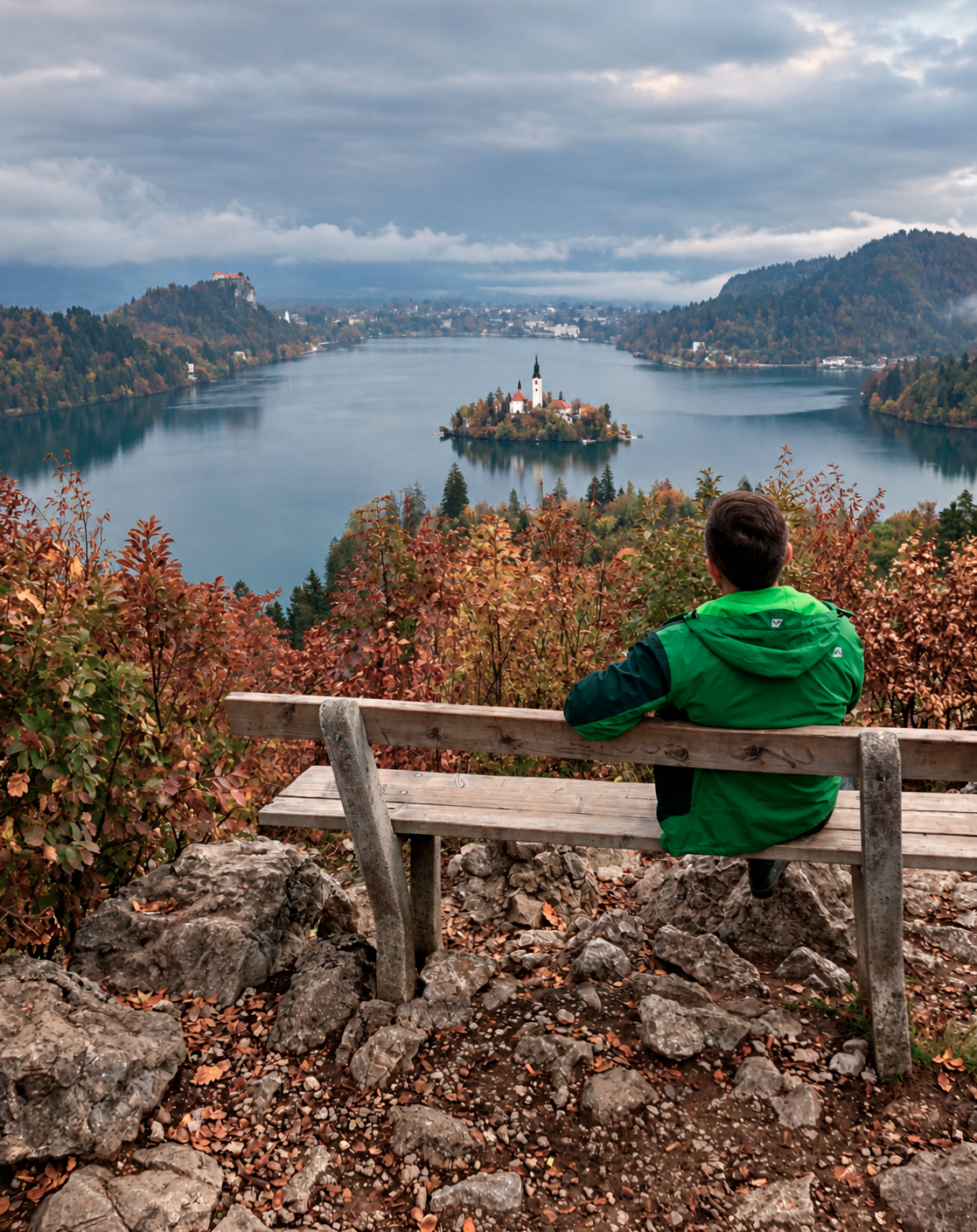
From the Mala Zaka lot it’s a twenty-five to thirty-minute uphill walk on a marked trail to Ojstrica (611 m / 2,005 ft): a rocky ledge with a bench and the classic view of the lake from above. It’s the most accessible of the viewpoints, which makes it the most crowded: at sunrise in season it gets tight with tripods. Arrive before the others, or use it as a stop on the way higher up.
Location 3: Mala Osojnica
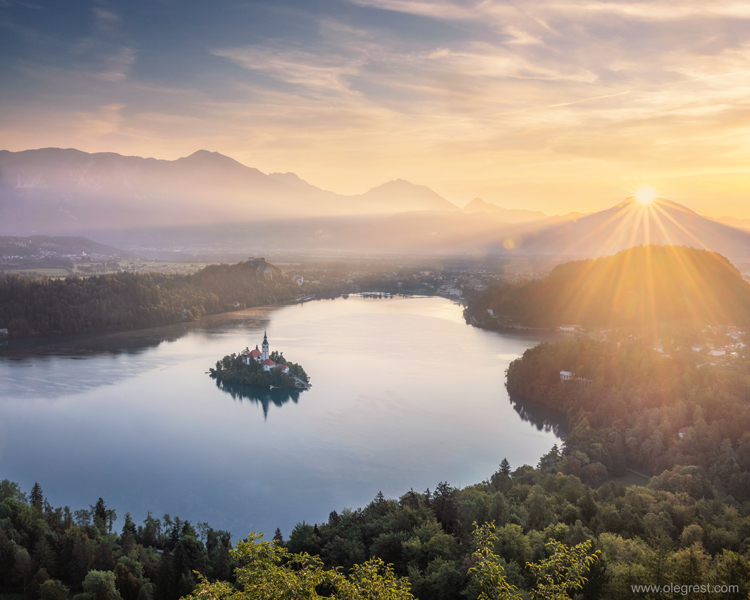
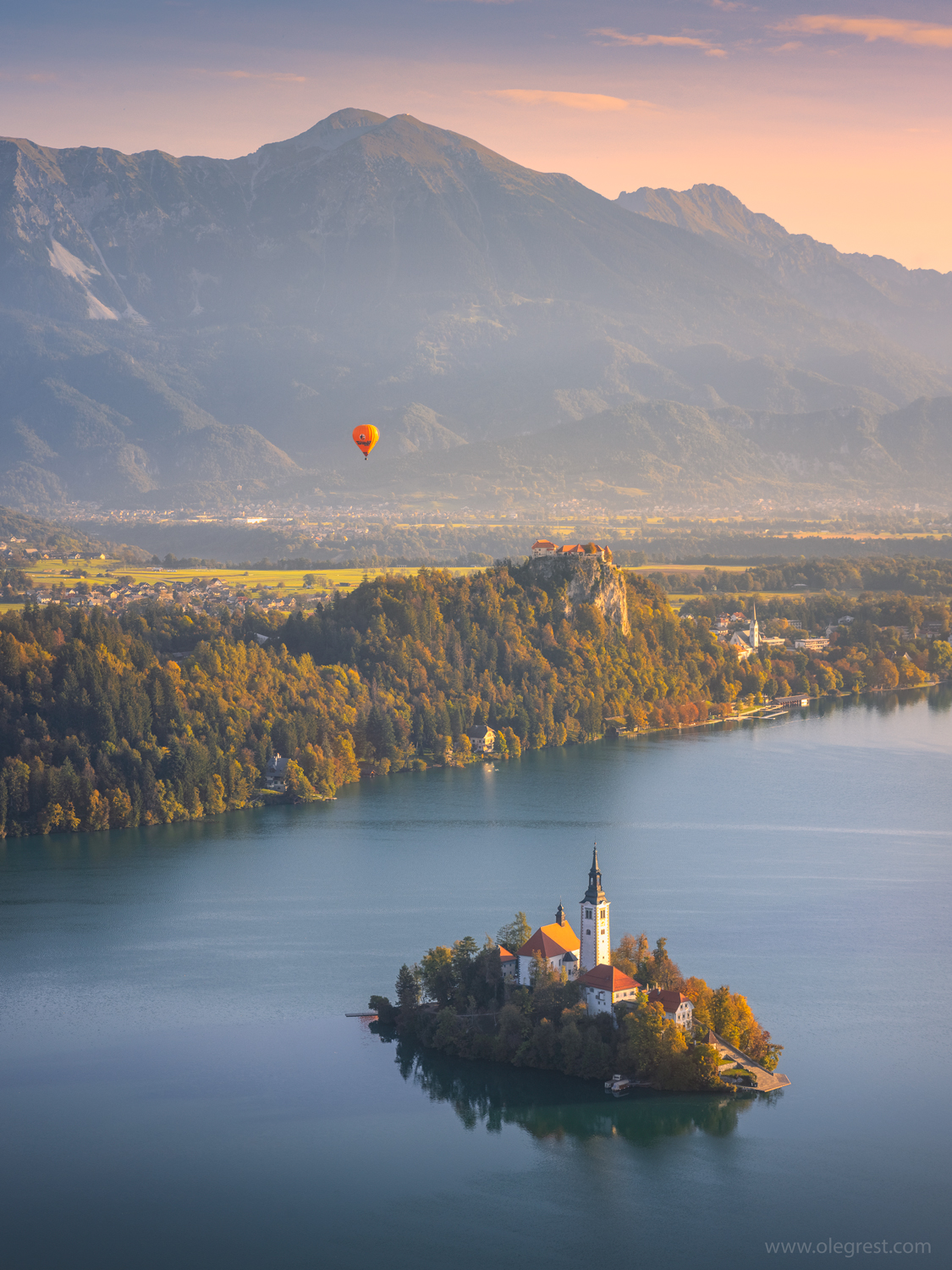
Bled’s main viewpoint – and the main spot of our autumn sunrise. The reason is simple: in October the sun rises directly behind the island, and from this height the first ray breaks out from behind the church across the whole bowl of the lake.
The climb. From the same parking lot it’s 40–45 minutes up a steep forest trail, about 200 m (650 ft) of elevation gain, to a platform at 685 m (2,247 ft). One section has a metal staircase. Moderate difficulty: anyone in reasonable shape can do it, but the trail is slippery after rain – you need shoes with grip. We leave in the dark, so a headlamp is mandatory – not a suggestion, a condition.
What to carry up. The standard zoom – yes, without question. The wide-angle can stay in the car: from this height everything fits without it. And here’s the thing almost nobody mentions but you genuinely need: a super-telephoto, 400–500mm. Let me explain why.
Fog and the super-telephoto
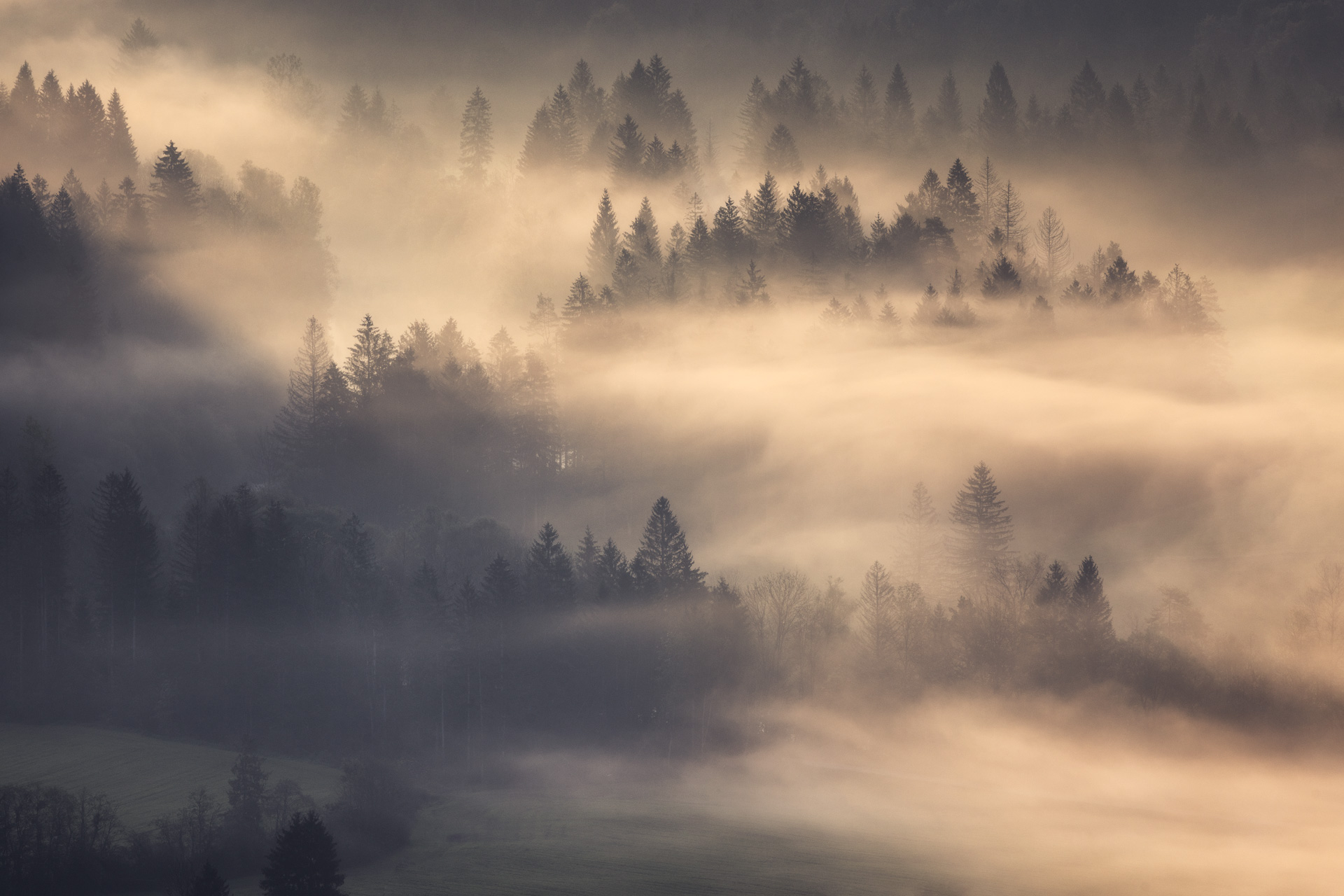
If the morning turns out foggy – and in autumn at Bled that happens often – a second show begins on the hills to the right of the island. Layers of fog lie between rows of spruce, the sun cuts through them in rays, and at 400–500mm you can carve out frames that look nothing like “Bled”: no island, no church, pure graphics of light and forest. While everyone on the platform shoots the same postcard of the island, you turn 45 degrees to the right – and shoot an entirely different series.
Hot-air balloons
In calm weather, hot-air balloons go up over Bled at sunrise. No guarantees – but if you’re lucky, a bright balloon over the castle or over the valley beyond the lake adds scale and a point of interest you couldn’t place on purpose.
When the weather doesn’t cooperate
Grey sky and zero fog is no reason to leave. What works at Bled on a “nothing” morning:
- Details on the telephoto. The bell tower, the castle, the pletnas, the stairway on the island — in flat, diffused light they often shoot better than in backlight.
- Leaves and frames. Yellow canopies at a wide aperture give you color the sky won’t.
- Long exposures. ND-10 and a couple of minutes — grey water turns glassy and low clouds become soft streaks.
- The blue hour. It happens in any weather: the church lighting and the shore lamps work under clouds too.
The drone: a different view
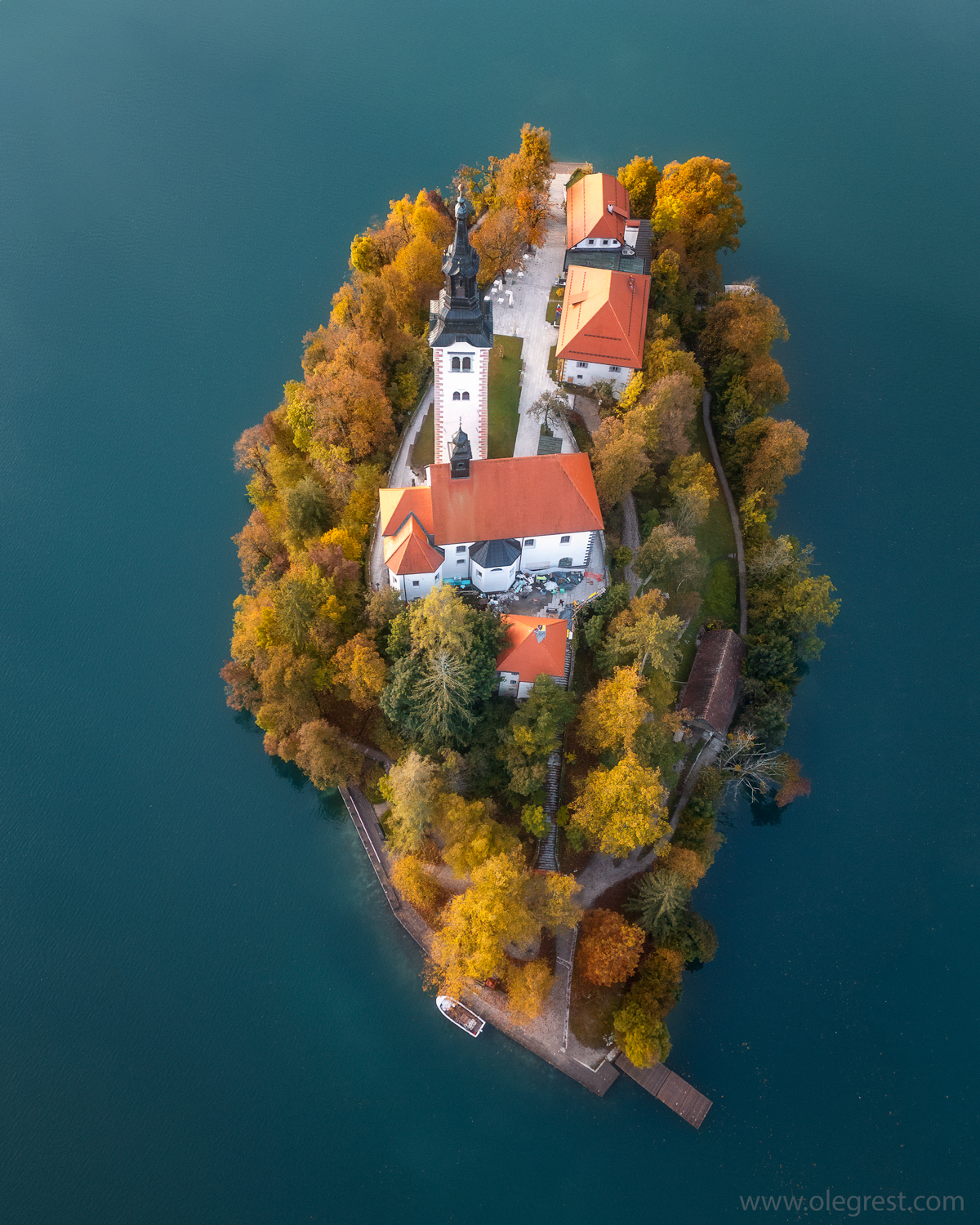
If the weather allows and local rules permit, a drone gives you frames you can’t get from the ground: the island straight down, like an emerald in dark water; the view from height at sunrise, when sky and lake are the same color; castle and island on one axis. Once more: check the current requirements before you fly — they change.
FAQ
Do I need several days at Bled? For one sunrise and one sunset, a day is enough. On our tour, Bled gets an evening and the following morning – and that’s enough to cover every spot in this guide: sunset and blue hour on the shore, sunrise and the climb to the viewpoint.
Ojstrica or Mala Osojnica? Ojstrica is closer and easier; Osojnica is higher and has the better geometry for an autumn sunrise. If you have the legs – Osojnica.
Can I do without a tripod? By day – yes. Sunrise, blue hour, long exposures, focus-stacking – no.
When are there fewer people? Before sunrise the shore is nearly empty. Tourists start arriving around 9 a.m.; by noon it’s crowds. Your shooting window runs from darkness to the first hour after sunrise.
Shoot Lake Bled with us
Every autumn we run a one-week photography tour of Slovenia for a group of 6-8 with two guides. Bled gets an evening and a morning: sunset and blue hour on the shore, sunrise and the climb to the viewpoint. Everything described above, our participants do with us on site – with guidance on spots, light and technique.
→ Slovenia Autumn Photography Tour — itinerary & dates
→ Read next: Ultimate Photography Guide: Slovenia
About the author: Oleg Rest is a professional landscape photographer. He has been returning to Lake Bled with a camera every autumn for years. A winner of landscape photography awards, published by Canon (Czech Republic, Ukraine), and an ambassador for Lucroit, H&Y, Skylum and f-stop. Together with co-guide Maria, he leads small-group photo tours of 6–8 participants.