
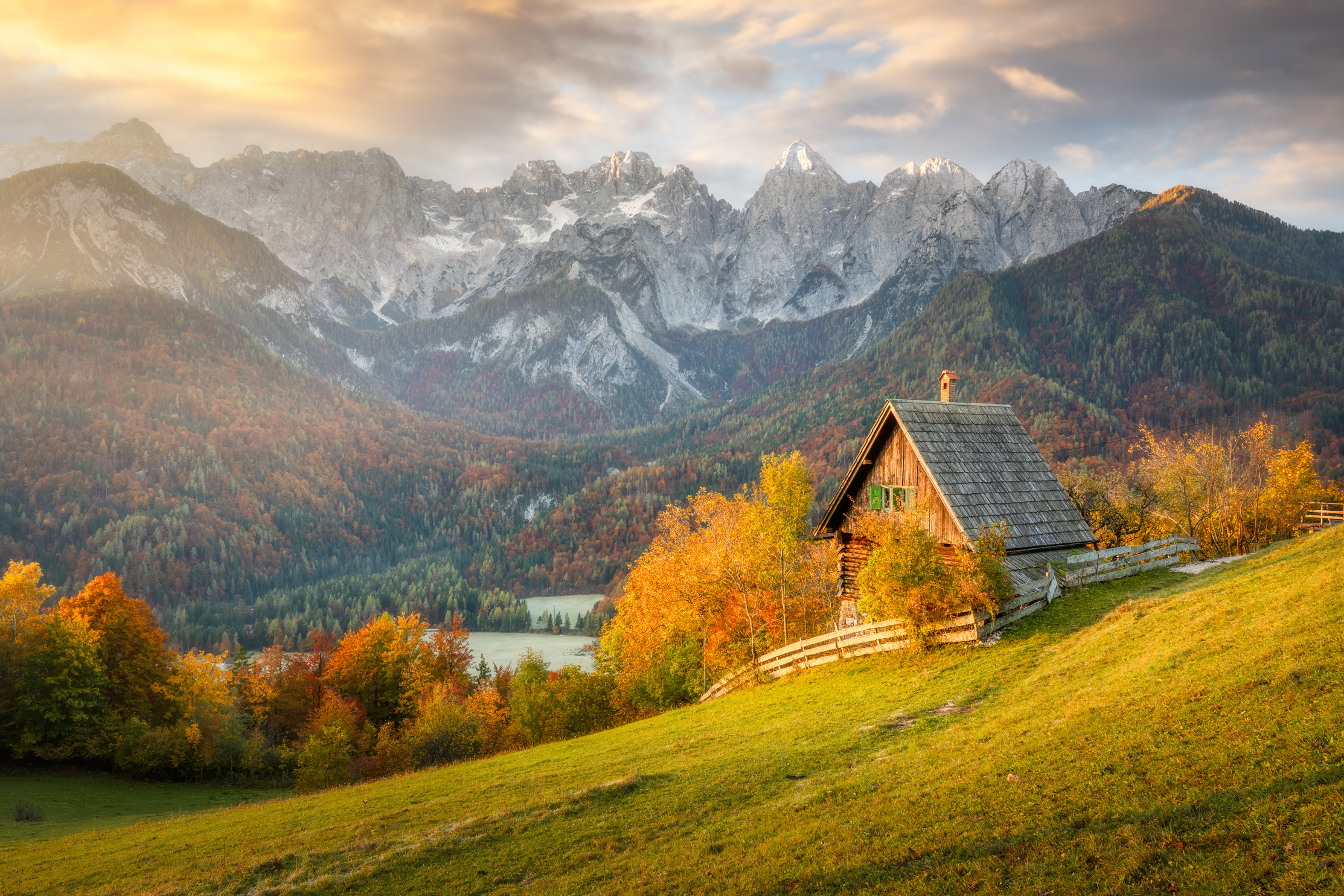
Slovenia barely registers on a map of Europe – a small country tucked between the Alps and the Adriatic. Yet few places on the continent pack so many different landscapes into so little space: alpine lakes with improbably clear water, limestone gorges and waterfalls, vineyards rolling over hills, medieval churches perched above seas of morning fog – and that particular soft light landscape photographers love.
We’ve been leading photography tours in Slovenia for years, and it gives more than it promises every time. This guide covers what a landscape photographer should know before the trip: the key locations, the best season, the light, the logistics – and a few field observations you won’t find in guidebooks.
Why Slovenia
The whole country covers 7,800 square miles (20,273 km²) – slightly smaller than New Jersey, about half the size of Switzerland. It measures roughly 190 miles (300 km) across, and you can drive from one end to the other in about three hours. For a photographer, that means one thing above all: no lost days in transit. You shoot an alpine lake at sunrise, the halls of a giant cave or a turquoise gorge at midday, and vineyards at sunset. In most countries, that’s three separate trips. In Slovenia, it’s one day.
Within that compact space, three entirely different worlds meet: the Julian Alps with lakes Bled and Bohinj, the karst southwest with its caves and cliff castles, and the wine hills of the east. Add forests covering more than half the country, and the density of shooting locations here is among the highest in Europe.
The best photography locations in Slovenia
Lake Bled
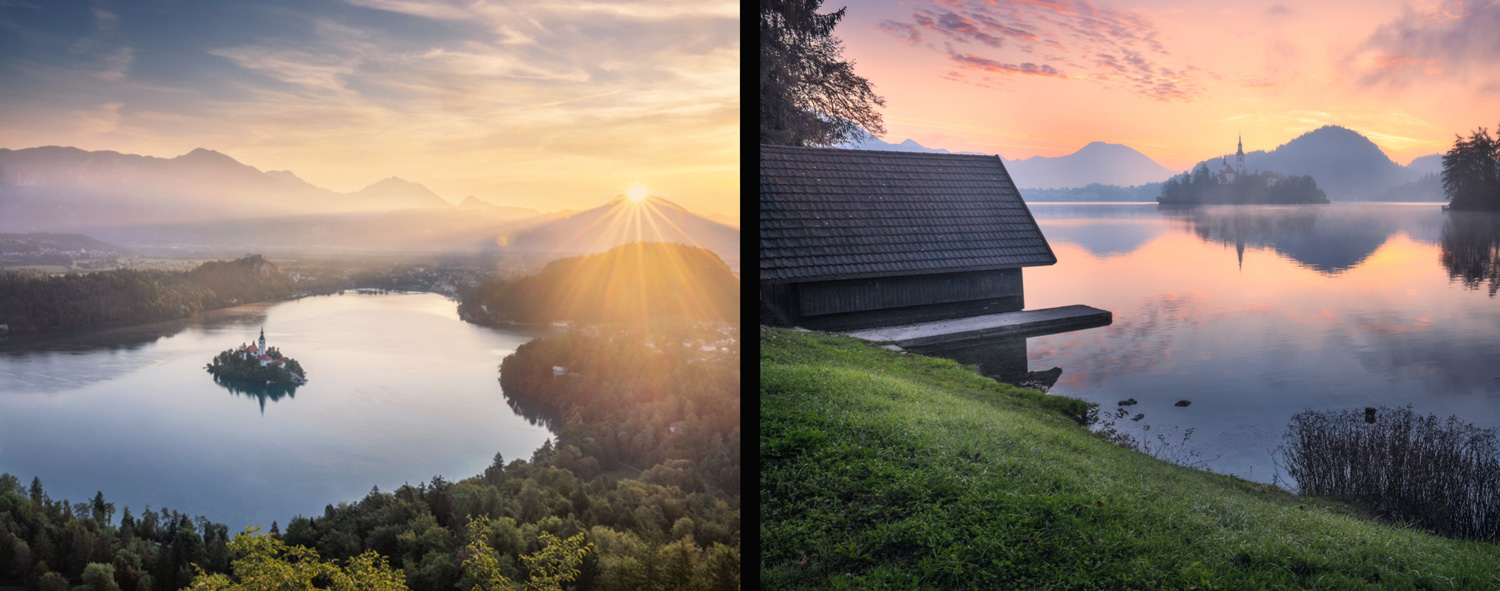
The most photographed lake in Europe – and its popularity is well deserved. A tiny island with the pilgrimage Church of the Assumption of Mary sits in the middle of the water, a castle stands on a cliff above the shore, and the Julian Alps fill the background. The classic shots are made from the waterline, but the real magic starts higher: a thirty-minute walk brings you to a viewpoint with the whole lake spread out below. At sunrise, with fog lying on the water and first light on the peaks, it’s one of those views that remind you why you carry a camera.
Vintgar Gorge
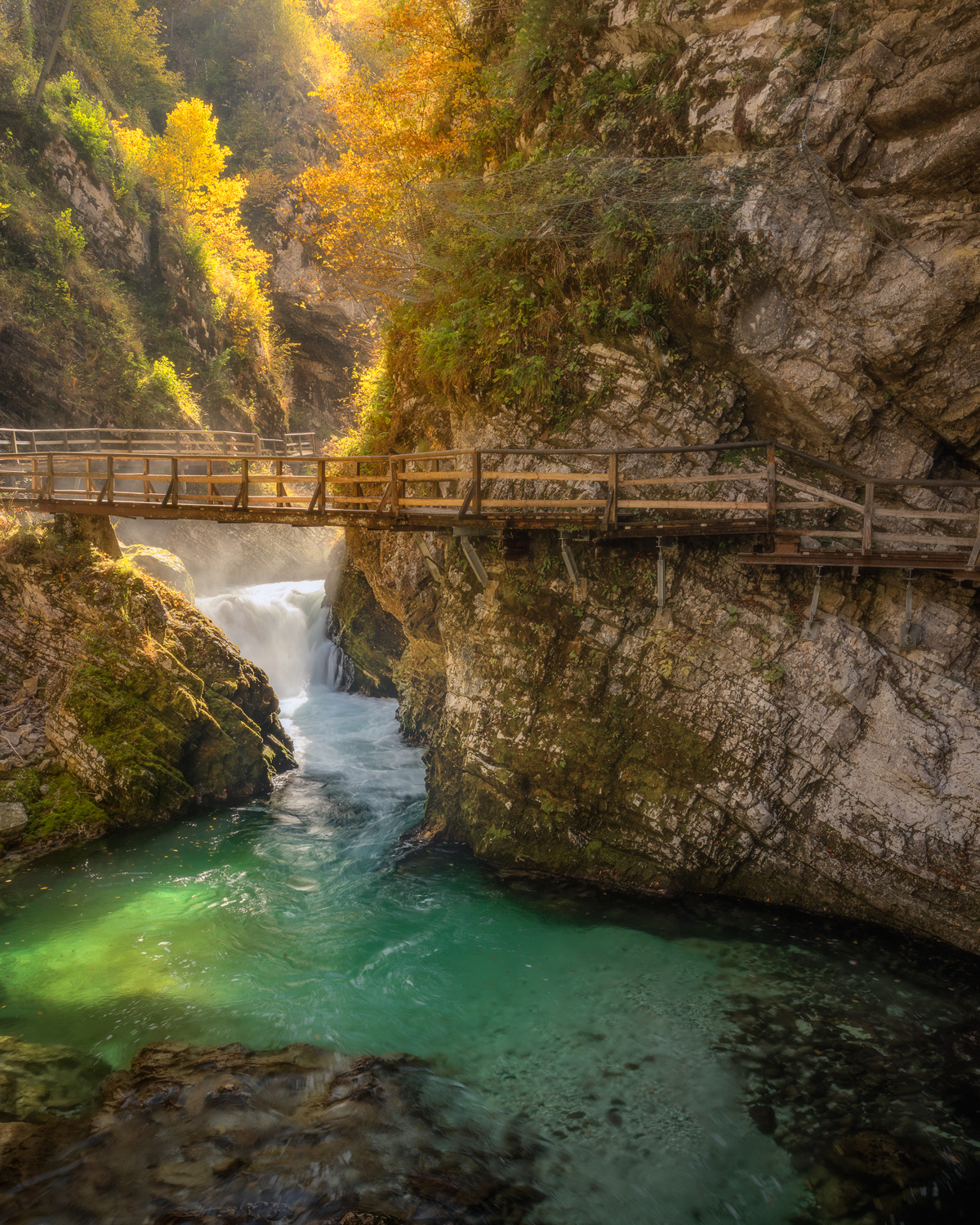
A canyon of the Radovna River inside Triglav National Park: turquoise water, wooden walkways above the current, light breaking through the rock walls. The gorge rewards a slow pace — long exposures, a polarizer and a careful eye. Come in the morning, before the main flow of visitors.
Lake Bohinj
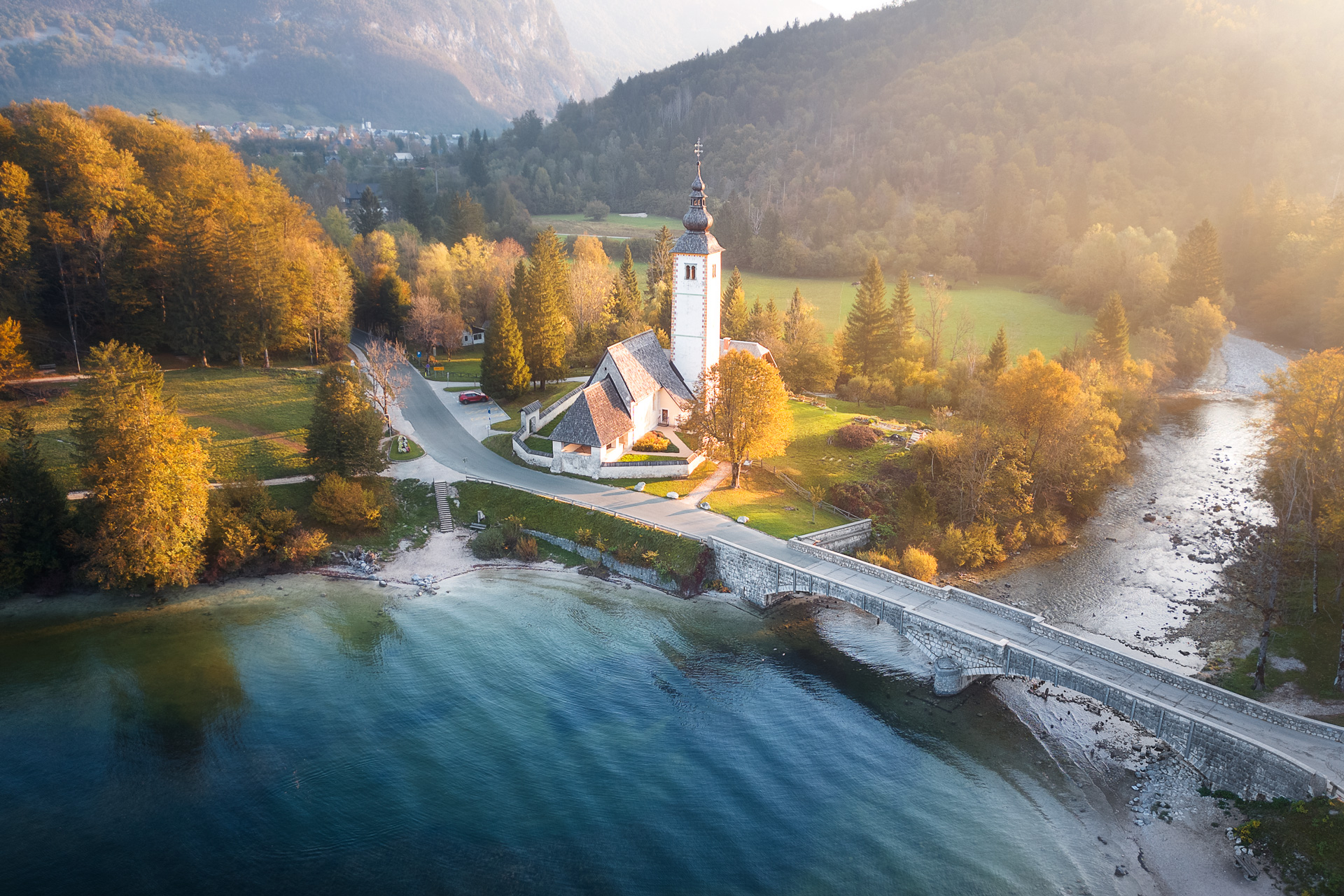
Bled’s bigger, much quieter neighbor inside Triglav National Park. If Bled is a postcard, Bohinj is a meditation: still water, mountain reflections, misty sunrises with no one else in the frame. In autumn the valley around the lake turns yellow and copper.
Hilltop churches: Jamnik and St. Thomas
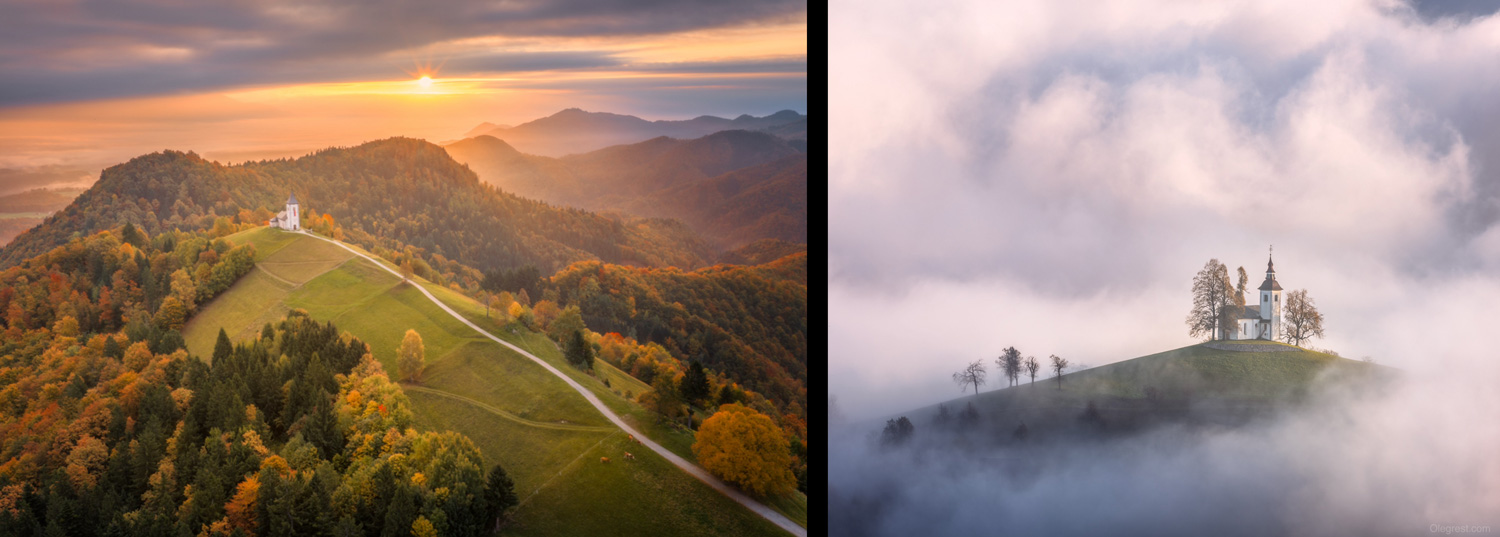
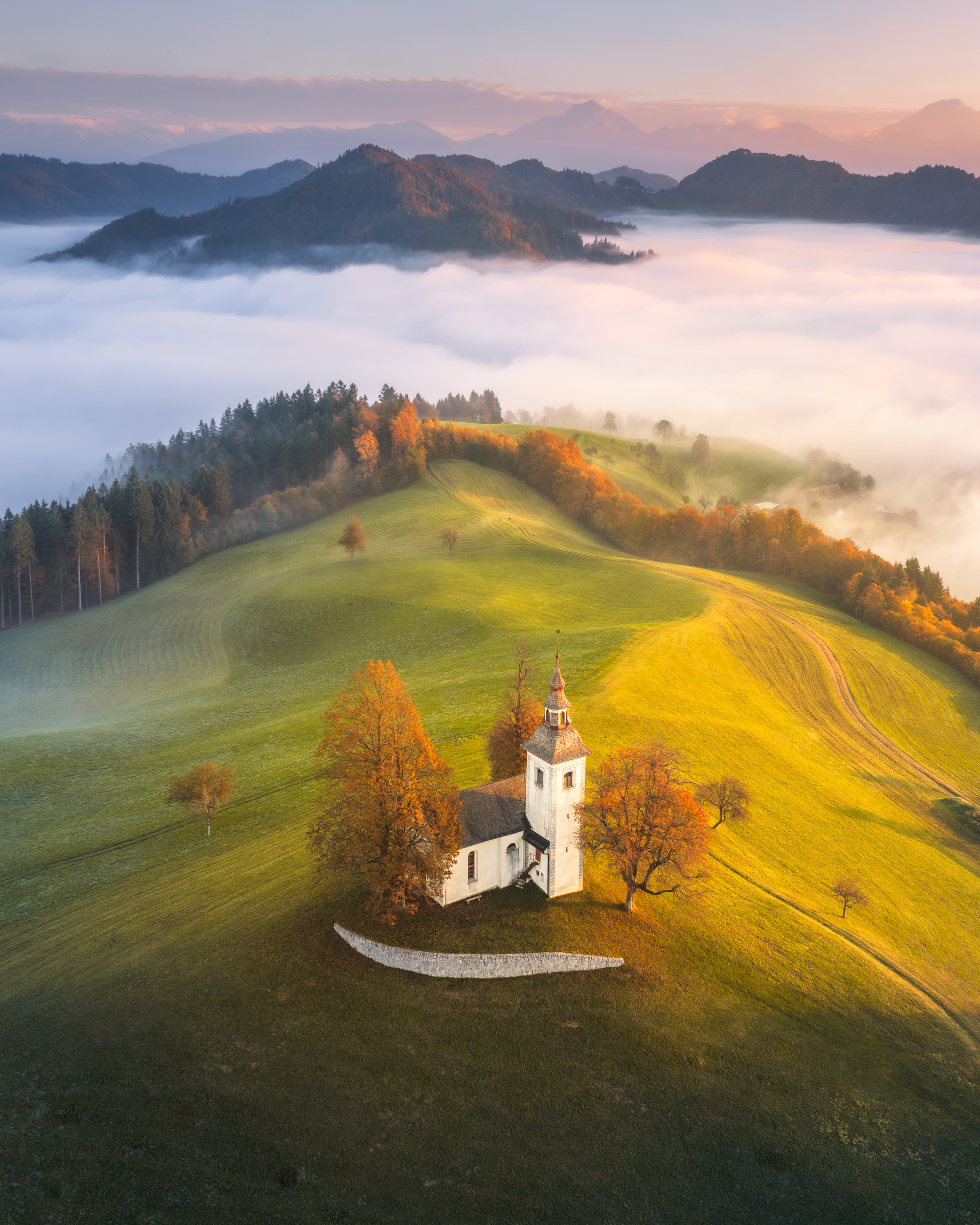
Small churches on hilltops are Slovenia’s signature. The church at Jamnik, on a ridge above the valley, works best at dawn with the sky burning behind it. And St. Thomas Church is the star of Slovenia’s famous morning fogs: on a good morning it floats above a sea of white. No one can promise fog – it comes and goes as it pleases – but when it does, a morning like that repays every early alarm of the trip.
Lake Jasna and Zelenci
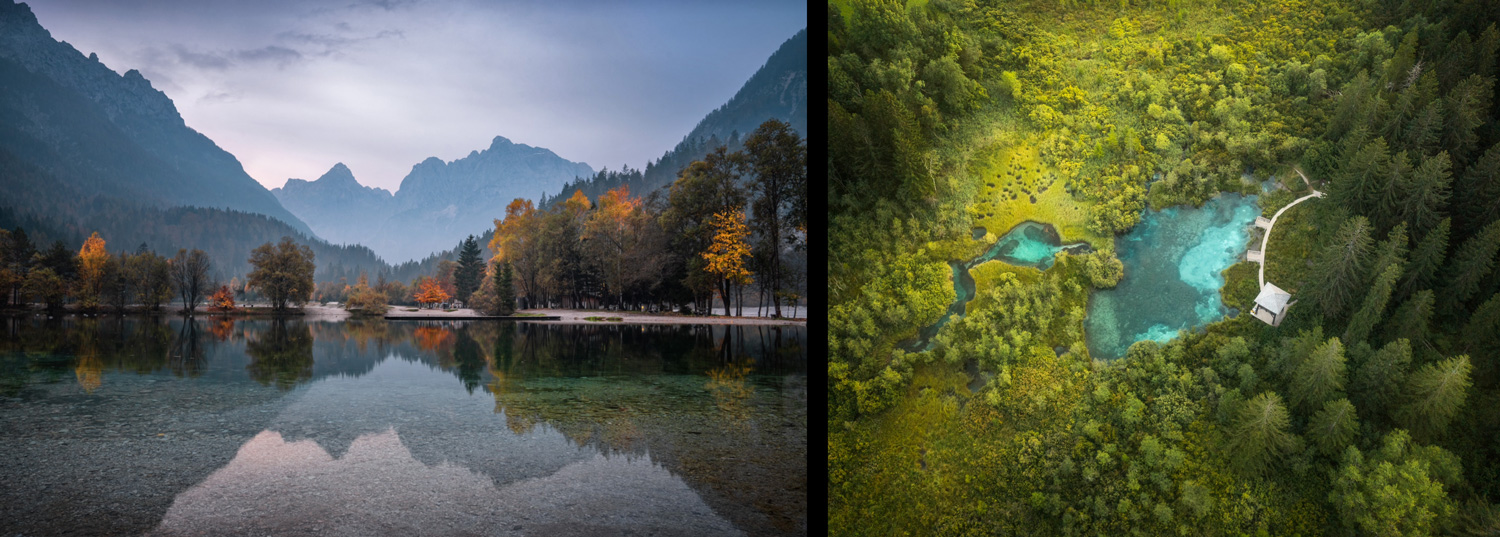
Jasna, near Kranjska Gora, is a pair of small mirror-like lakes with mountain peaks behind them – a place worth visiting more than once per trip, because the light transforms it completely. Nearby is the Zelenci nature reserve, the source of the Sava Dolinka River: turquoise water welling up from the bottom, wooden boardwalks, complete silence. Zelenci is at its best at sunset and in the still morning haze.
Velika Planina
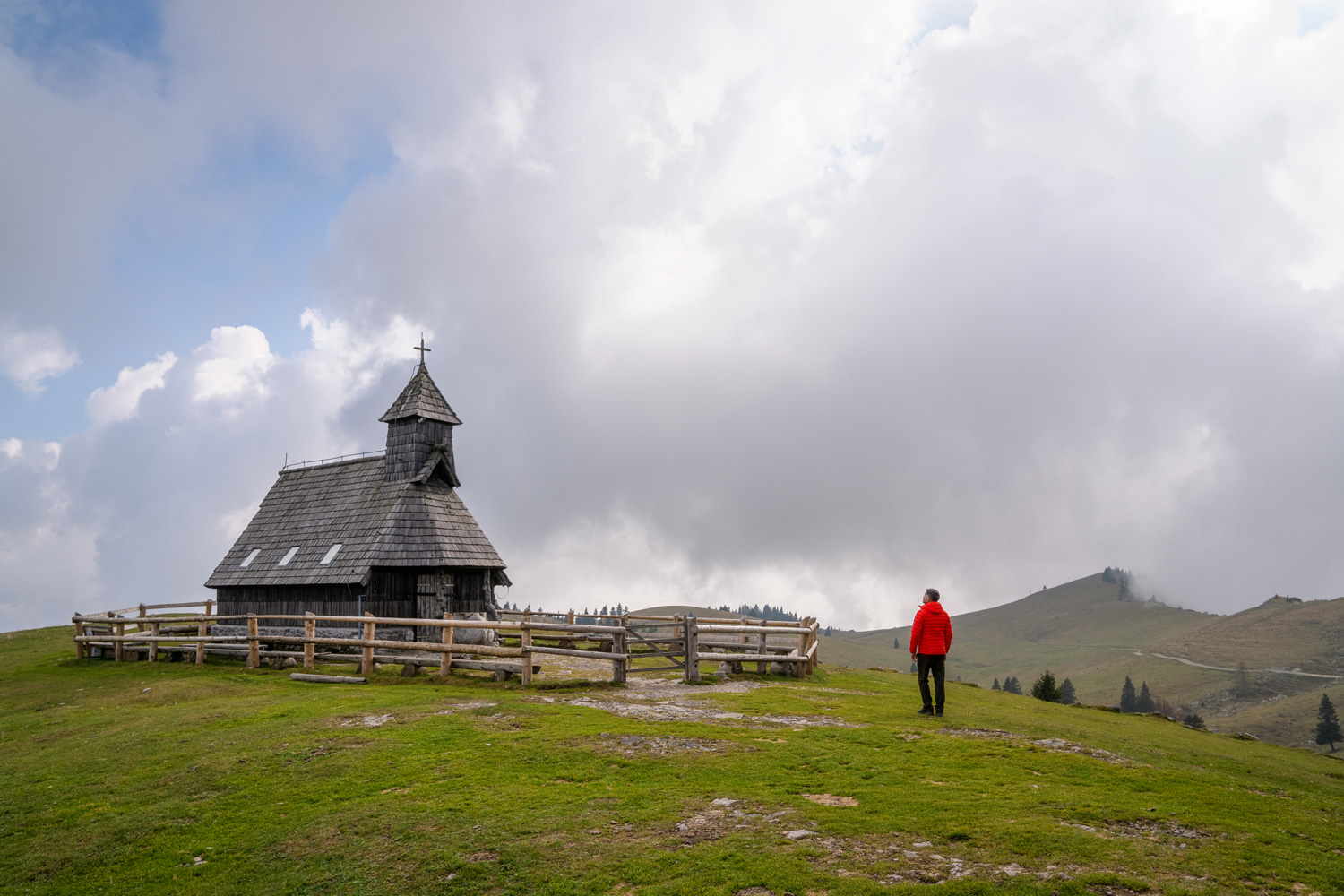
A high plateau at about 5,200 feet (1,600 m) in the Kamnik–Savinja Alps, home to one of the largest preserved herdsmen’s settlements in Europe. Dozens of traditional wooden huts with shingled roofs are scattered across alpine meadows, ringed by mountain ridges. Herdsmen and their cattle live up here in summer; by autumn the plateau empties out – and for a photographer that’s a gift: clean shots of the huts in autumn light, with not a single person in the frame.
Postojna Cave and Predjama Castle
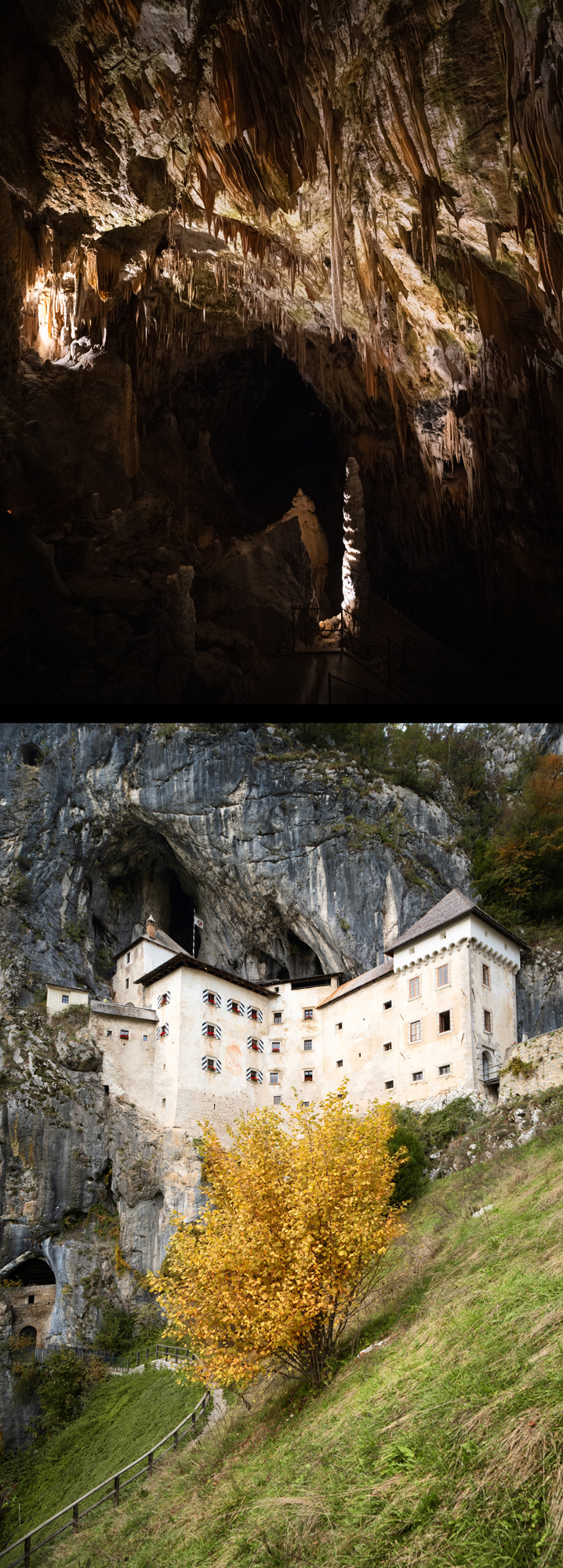
Slovenia’s karst southwest hides an entire underground world. Postojna Cave is one of the largest show caves in Europe: 15 miles (24 km) of passages, chambers the size of cathedrals, forests of stalactites and an underground train that carries you deep into the mountain. Shooting underground is its own discipline – little light, enormous scale – and the frames look like nothing you shoot on the surface.
A short drive away stands Predjama Castle: the world’s largest cave castle according to Guinness World Records, set into a sheer 400-foot (123 m) cliff for the past eight centuries. It’s so cinematic it inspired, among others, George R.R. Martin.
The vineyards of Styria
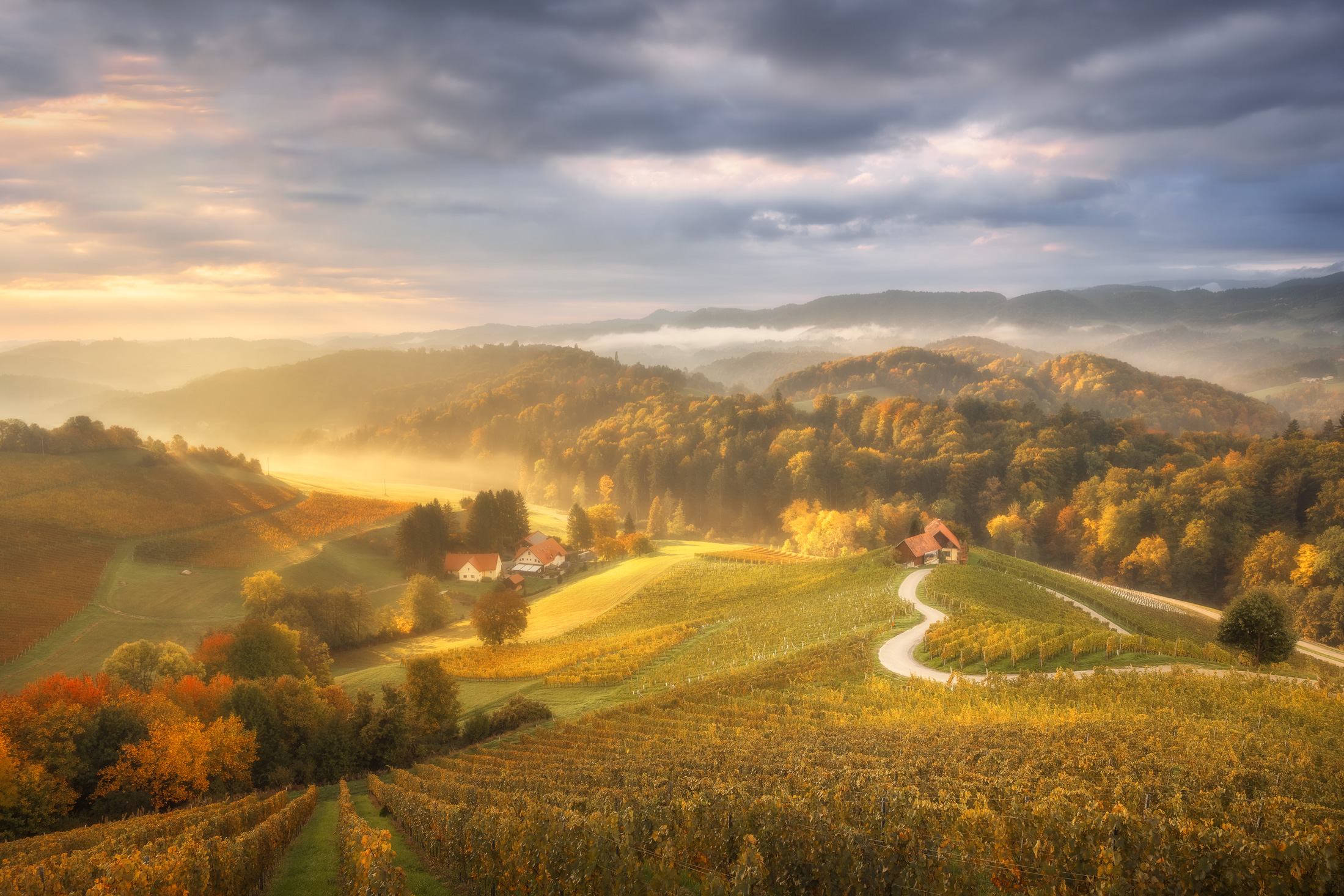
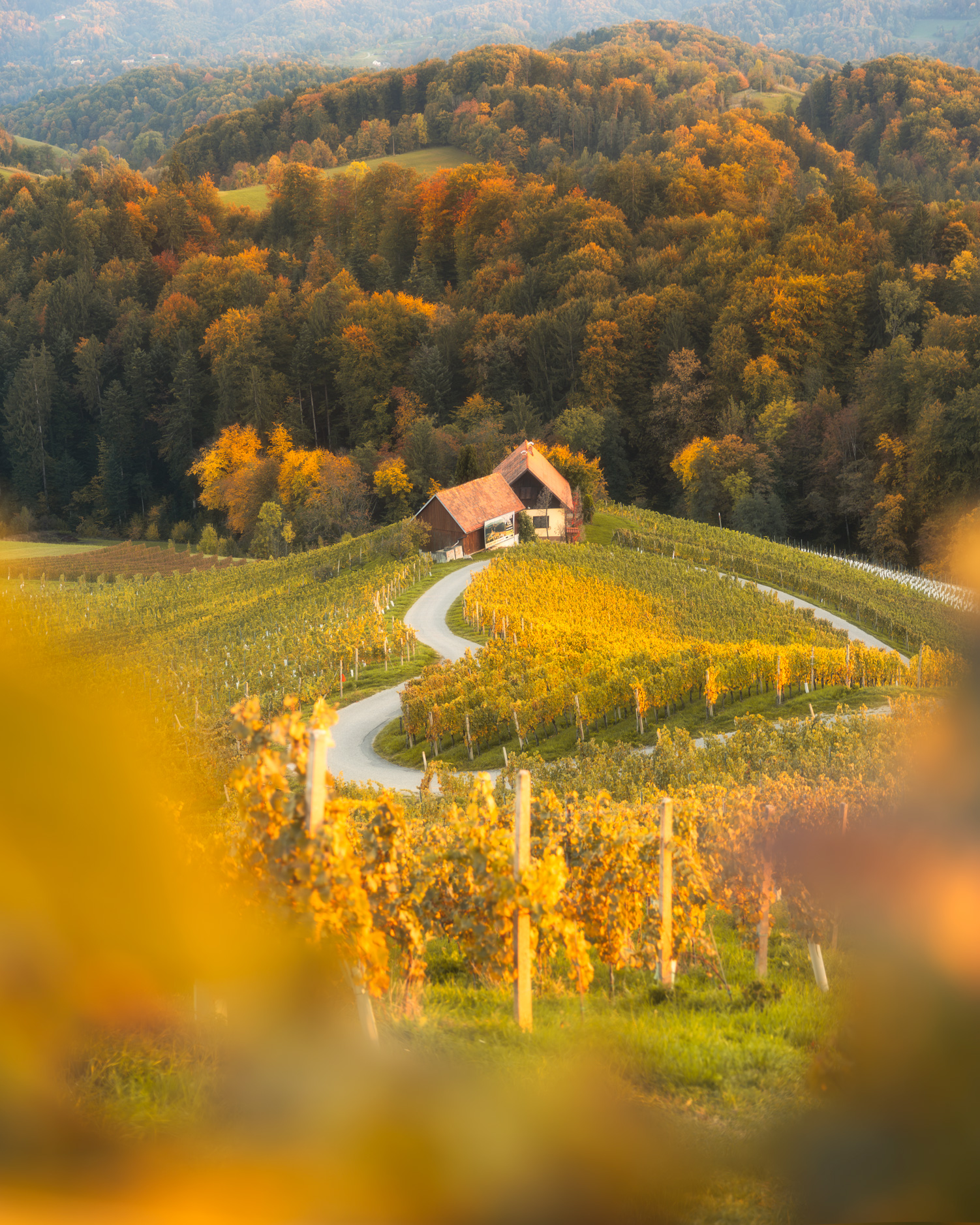
Eastern Slovenia is hills striped with rows of vines — a landscape closer to Tuscany than the Alps, minus the crowds. In autumn the vineyards turn gold and crimson, and the soft relief offers endless telephoto compositions. Here in Maribor grows the oldest fruit-bearing grapevine in the world — over 400 years old, another of Slovenia’s Guinness records. For a photographer, these hills are the perfect end to the alpine part of the route: a different rhythm, different light, a different country within the same Slovenia.
When to go: why we choose autumn
You can shoot Slovenia year round: waterfalls at full power and fresh greens in spring, alpine meadows in summer, snow on the peaks in winter. But if we had to pick one window, we’d pick October every time. Here’s why.
Fog. Autumn is the season of Slovenia’s famous morning fogs. Cold nights and still-warm ground fill the valleys with seas of white, and hills and churches stand above them like islands. No two mornings repeat.
Color. Beech forests – and Slovenia is one of the most forested countries in Europe – turn copper and gold. Autumn adds color to everything: lakes, gorges, vineyards.
Light. The sun rides lower, sunrises and sunsets are soft and slow, and golden hour actually lasts an hour.
Quiet. The summer crowds are gone. At most locations you’ll have the view practically to yourself – a luxury that’s nearly impossible to buy in Europe.
Comfort. October in Slovenia is usually mild: daytime temperatures around 60–68°F (15–20°C), rain infrequent and usually brief. Early starts are easier when you’re not fighting heat or frost.
More than landscapes
A photo tour isn’t only about the pictures. Slovenia is a country you’ll want to taste, not just photograph, and we’ve built that into the route:
-
- A night at a working wine farm, surrounded by vineyards: see how the wine is made, join a tasting if you like, and bring a bottle of Slovenian wine home.
-
- Food that deserves an article of its own. Slovenia stands at the crossroads of Alpine, Mediterranean and Balkan traditions: fresh seafood and excellent meats, an abundance of vegetables, local desserts. Try burek, the famous kremšnita cream cake on the shore of Lake Bled – and, of course, Slovenian wines, still almost unknown abroad and all the more surprising for it.
-
- Places with history: a herdsmen’s plateau, a castle in a cliff, old churches – the route is built so the country opens up between shoots instead of flashing by the window.
Practical notes
Getting there. Ljubljana’s international airport is the natural point of entry; all of alpine Slovenia lies within about an hour of it. We meet and see off our groups right at Ljubljana Airport.
How long. A week is the sweet spot: enough for the Alps, the karst and the vineyards without rushing, with time in reserve to revisit locations that depend on fickle light.
Where to stay. Slovenia is compact, and the right base changes everything: no packing your bags every day, no burning the morning hours in transit. Our group stays at a lovely 4-star eco-hotel surrounded by mountains, in the best spot logistics-wise for reaching all the key locations – plus one special night at the wine farm among the vineyards.
Camera gear. A tripod is non-negotiable – sunrises, fog and water all ask for longer exposures. Lenses: a wide angle (11-24mm or 15-35mm), a standard zoom (24-70 / 24-105) and a telephoto 70-200mm, or better yet 100-500mm: foggy mornings and vineyards open up at long focal lengths. A polarizer for the turquoise water of Vintgar and Zelenci, a headlamp for pre-dawn starts, spare batteries.
Clothing. Layers: a warm waterproof jacket and footwear for sunrise shoots, fleece, a hat and gloves – mornings in the mountains can hover around freezing even when the day turns warm.
Drones. Worth bringing – the vineyards and the high plateau look fantastic from the air. But flying isn’t allowed everywhere: in Triglav National Park drone flights are prohibited without a special permit; elsewhere standard European rules apply. On tour, we point out where you can fly and where the drone should stay in the bag.
FAQ
Is Slovenia a good choice for a first photography tour? Ideal: short transfers, easy logistics, locations that involve almost no hiking – and material on par with the “big” alpine expeditions.
How physically demanding is it? Most locations are minutes from the vehicle. The longest walk is about thirty minutes at an easy pace, up to the panorama above Lake Bled.
Will I see the fog above St. Thomas? No one can guarantee fog. But October gives you the best odds of the year – and knowing the backup locations for a fog-free morning is exactly what you pay a guide for.
Language and money? The euro; English is understood practically everywhere tourists go.
Come shoot Slovenia with us
Every autumn we run a one-week photography tour of Slovenia for a small group – 6–8 participants and two photographer guides, so everyone gets real attention. Sunrise above Lake Bled and the fogs of St. Thomas, the underground halls of Postojna and the gold of the Styrian vineyards – plus a few secret spots even many local photographers don’t know. Those we keep for our participants.
Slovenia Autumn Photography Tour – itinerary & dates
About the author: Oleg Rest is a professional landscape photographer. He first picked up a camera – a film-era Zenit – at age six; today he shoots a Canon R5 and has been returning to Slovenia with a camera for years. A winner of many landscape photography awards, published by Canon, and an ambassador for Lucroit (Spain), Skylum and f-stop (USA). Together with co-guide Maria, he leads small-group photo tours of 6-10 participants.